Overview
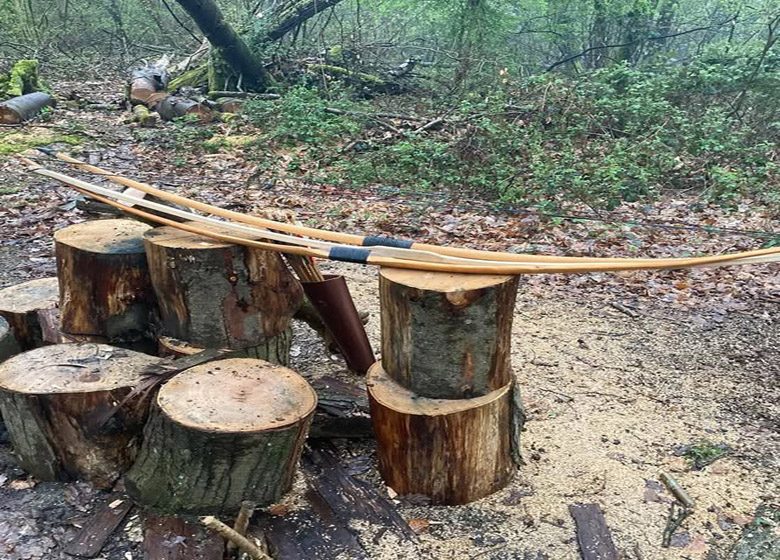
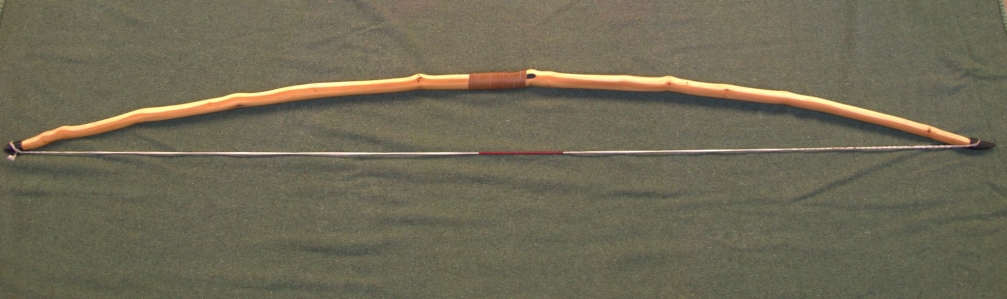
This course has been several years in the planning and provides a unique platform to explore the craft, history, and heritage of wooden bow making. Focusing on longbows, it traces designs from the earliest bows of Europe’s Mesolithic hunter-gatherers, through the powerful weapons of medieval warfare, to the rediscovered techniques and materials used by modern bowyers.
Students will not only learn the practical skills of construction but also gain a deeper appreciation of the role wooden bows have played in shaping life and culture across north-west Europe. Over the duration of the programme, participants will create several longbows of different designs and specifications, developing both technical ability and an understanding of archery heritage.
To complete the qualification, students must attend a minimum of five workshops and one final assessment. This can be achieved flexibly over a 24-month period, with the training delivered in three-day blocks to allow time for practice and consolidation between sessions. Some project work will also be required at home, and each participant will need a set of hand tools to continue their work outside the workshops.
Course Content
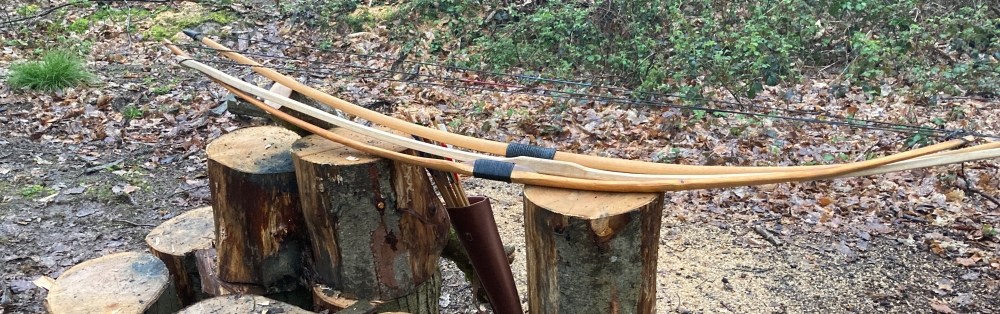
The programme guides students through every stage of bow making, beginning with the selection of suitable felled timber and the preparation of round wood for specific designs. Participants will construct a variety of longbows using different timbers, gaining experience in techniques that influence design, efficiency, and draw weight.
Attention is given to working with the natural character of wood, including knots, twists, lumps, and bumps, as well as the creation of specialist features such as arrow plates and horn nocks. Students will also learn methods for repairing bows and adapting designs to improve performance. By the end of the course, each participant will have produced a number of longbows and developed a comprehensive understanding of both the craft and its cultural significance.
Although not assessed, arrow making and string making will also be explored.
To make travel easier clients are welcome to arrive on the evening before each module starts
Fees
£2205 (Deposit £100)
Entry Requirements
This programme assumes no prior knowledge of the subject.
Location
Near Heathfield, East Sussex
Details
This programme is run under license by Phil Brooke with John Rhyder being responsible for the quality assurance. This is still a Woodcraft School course and the certification will still come via Woodcraft School and the NCFE. The main difference will be that the booking and financial arrangements will be made directly with Phil Brooke.
Phil is an excellent instructor who John has personally been training for this role for over many years. The programme is still a Woodcraft School course and if we didn’t think Phil capable of delivering a programme equal to what has gone before we would not grant the license. Any courses that Phil runs will be licensed to him exclusively so rest assured this isn’t a quality diluting franchise system. All of these programmes will therefore still be found on our Woodcraft School website alongside the ones John will lead.
Course Dates
This course in run under license on our behalf by Phil Brooke dates and further details are available at the link below.


Certification
The original NCFE‑accredited woodcraft courses were created by Woodcraft School and John Rhyder, in partnership with Plumpton College.
These were the first of their kind and remain the origin from which later courses have emerged. The history of this development can be read here.
Other providers now offer NCFE awards developed independently to meet their own aims. As these are customised qualifications, they naturally differ from ours. Our qualifications remain singular in their provenance, depth, and integrity, and we believe they represent the highest level available.
 The award level is set at level 4 by using national benchmarks. Successful candidates will receive the Certificate Traditional Bow Making from the NCFE who we will be using to underscore the quality of this programme.
Levels
The level of our programmes implies the degree of work needed to be done by the student to achieve certification. Our awards are set at level 3 and 4 but this does not imply that levels below these benchmarks are needed prior to joining a course. Guidelines as to the complexity of the levels can be found here.
Assessment
Assessment takes several forms depending on the subject matter and will include observation, question and answer sessions, written papers, identification tests and assignments. The process is thorough and vigorous and designed to ensure you have full understanding of the subject areas. The assessments takes place at set times during the programme.
It is possible to take the training element of this course and not the assessment in which case a Certificate of Attendance is offered.