Ancient Sentinels

This article was originally published in The Bushcraft & Survival Skills Magazine

Ancient Sentinels

I have always been drawn to trees, fascinated I suppose by their aura of permanence.  Many species if allowed can live to a very great age, theoretically trees can carry on living almost indefinitely so long as they do not succumb to disease or damage.

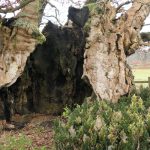
In the UK we have more ancient and veteran trees than anywhere else in Europe. However veteran tree is not necessarily old, and many young trees have veteran features.  One definition of a veteran tree I particularly like is “a tree suffering from the rigours of life”.  Generally speaking, this means that the individual tree will have holes, cavities, flaking bark and all manner of features that to the uninitiated may look like the tree is in imminent danger of collapse. In some instances, this may indeed be the case but trees that are growing old gracefully and naturally do have strategies for dealing with the decline in their general structural and physiological vigour.
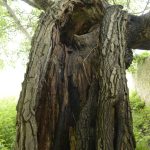
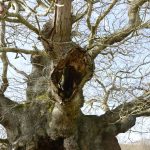
How trees age.

There is a saying that an oak tree spends 300 years growing, 300 years living and 300 year slowly dying. And this may be true although it may be difficult to say for sure how exactly a trees live cycle fits in with the passing of time. Partly this is because they travel the centuries in what are effectively eons compared with our own short journeys and also because in much of northern Europe they are messed with. Frequently ancient trees have removed for safety reasons or been swamped by faster growing trees. It can be hard therefore for us to be sure exactly where trees would end up naturally.

Not all tree species are equipped for a long-life, a birch, unlike an oak invests much less energy in growing slowly and harbouring its resources for times of trouble instead adopting a rock and roll lifestyle living fast and dying young. Their roll in the ecosystem is that of a pioneer, colonising open ground and creating a forest environment. If they reach a century they are doing well.

There are exception and some tree species behave differently but generally speaking when a tree is young it spends its time gathering energy and using that energy to grow tall and become a canopy tree. It can then set seed and reproduce itself, there is little point in carrying on growing once the canopy is achieved as being taller makes for exposure to wind and also leads to problems with water and nutrient uptake among others.

All trees are capable of rapid growth but taking a slower attitude to life and harbouring some of that energy for a rainy day, so to speak, means that options exist for surviving lean, drought years or fending off defoliation insects or having energy to seal of infection from bacteria and fungi.

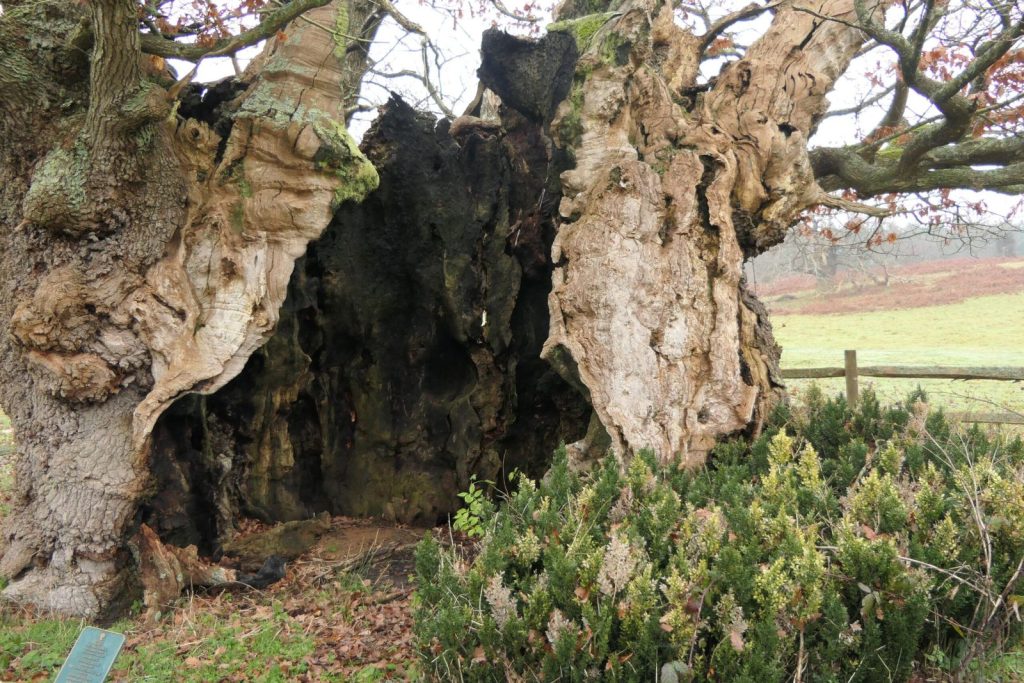
Once a tree that through more conservative lifestyle choices, reaches a certain height and maturity it begins a process known as retrenchment. Essentially this involves the dying back of the upper crown while a smaller secondary crown forms lower down. This can often be seen in many older oaks throughout the country. It may be caused also by damage to the tree but is normally recognisable by the obvious thinning of the upper branches but the lower ones still being dense and hard to see through. At the same time the tree will also become hollow with the aid of helpful fungi and then send aerial roots into its own rotted heartwood and eat itself. These aerial roots can in some instances form a separate plumbing system to the lower crown branches that become effectively smaller versions of the adult tree. For this reason, they are known as reiterant trees.

Oaks become known as stag headed as the upper crown eventually disappears leaving on the desiccated heartwood of the older canopy in the form of the spiny wood so highly prized by cold bushcraft practitioners and log merchants alike.

A short squat hollow structure frequently survives gales and storms better that a young tall and perhaps more vigorous tree. The Elisabeth oak at Cowdray Park in West Sussex is very short and very wide and has survived the century’s despite being in a relatively exposed position in the remnants of old wood pasture.

Some species do not die back slowly and instead do it all on one dramatic effort. Beech are example of this and will often snap themselves in half or even lower and then carry on for many decades on a much-reduced canopy. This, together with summer branch drop, is one reasons why mature beech trees can be dangerous to camp under.

I have seen this mechanism in action across the northern hemisphere and in primary forests of the pacific Norwest of America and with conifers as well as broadleaved trees.

One of the reasons we in the UK have so many ancient trees is due to management systems that exploit the tree regenerative power to keep re growing and the retrenchment mechanism. Once the crown is lost then the tree will send up reiterant versions of itself from dormant buds if this happens low down it results in a coppice stool if higher up it creates a pollard.

This pollarding creates the hollowing out seen in ancient trees but when is done in a regular cycle effectively restarts the tree again creating specimens that may live many times longer than an unmanaged tree. It is possible to find pollard oaks in Windsor great park that are described in the doomsday book of 1086. Presumably they at that time large enough to be noteworthy and so already a fair bit older than the 900-year life span credited to an oak tree.

In years gone management by pollarding was quite extensive with the new growth from the pollards kept above the height of grazing animal which could be run underneath as a kind of early permaculture. Periodic cutting of the branches provided fodder and timber and re invigorated the tree in an almost endless cycle. The landscape produced, known as wood pasture, is a form of woodland and very old and increasingly rare. There are exemptions but many surviving woodlands of this type are now sparsely stocked and often have no “new” ancients waiting to replace the old when they finally succumb.

Benefits of ancient trees

An ancient tree be it a pollard or a more naturally declining individual is a living ecosystem in its own right. Supporting an amazing array of species not just those that use the inevitable holes and cavities found in these trees, but also are host to range of specialists found only here. These include fungi which also help with the hollowing out process, saproxylic beetles whose larvae live in the wood pulp in the hollow steams and bryophytes finding a foothold in the cracks, crevices and bumps inevitable on an ancient tree.  Many of these species are threatened and are red data book listed.

Some of the insects associated with these trees are particularly vulnerable as the adults need nectar and therefore flowering plants close by this would of course have been provided in the pastures of yesteryear. It could be possible that such specialist requirements of ancient hollowing trees and land open enough to support flowering plants support the theory of Frans Vera that our ancient pre managed forests where a much more open savannah type of growth with pockets of woodland and pastures kept open by grazing animals.

Ancient and veteran trees also link us to our own social history we have perhaps all heard of the major oak, hiding place of Robin Hood, or the Sycamore tree that the Tolpuddle martyrs met under. You may also find tree history local to you, the Elisabeth oak mentioned early is rumoured to have been named after Queen Elisabeth the 1st . According to one story she shot a stag from under its shade with a longbow during a visit to Cowdray estate. This tree is a ten-minute drive from where I live.
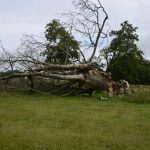
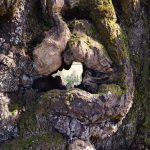
Threats to ancient trees.

Ancient and veteran trees are of lower vigour than the youngsters just embarking on life. The biggest threat to them is often overshadowing by younger more vigorous trees, often twisted and gnarled they may have been left in forests as being more trouble that they are worth to fell. Consequent replanting, often with fast growing conifers, sees them frequently struggling for light and therefore food. Carefully planning is required to release these trees as sudden exposure to sunlight and wind by the removal of competition can open them up to forces, that they cannot deal with.

Compaction is also an issue people cattle and machines with too much access to the roots particularly when the ground is soft can force the air out of the soil and in extreme situations kill the tree.

Livestock can also skin the bark from exposed roots and strip the bark from the truck itself, I have seen hollows opened up by cattle and the wood pulp scattered. From an ecological perspective and intact cavity full of wood mulch is much more valuable than an empty one.

Tidying up excessively is also potentially damaging, trees often gently lower branches either through just growing down or by partially breaking. These can act as support to the tree and may even root and great another specimen. Yew trees do this regularly, Kingley vale in West Sussex is the biggest yew forest The UK and possibly Europe and has some specimens that could be 2000 years old according to some estimations. They regularly drop branches in support and these also root. This leads to an obvious thought that the old trees may also have once been rooted branches, so on back perhaps as far as the last ice age. Could it be that these ancient wanders have been marching across our landscape for 8000 years making even the slowest of Ents appear hasty?

Removing these untidy falling branches robs the tree of support and perhaps confines to the life in the same location.

Anything that does fall from the tree should be stacked in close proximity as intermediate habitat. When veteran trees finally succumb, they should also not be removed. The importance of deadwood in conservation cannot be overstated.

Changes in land management and fears of safety have unfortunately left us with perhaps a more serious threat that any listed above. There are very few if any areas where veteran trees are being created to replace the old ones. Even should this change we still face a big age gap; we may have new trees encouraged and old veteran trees falling apart but nothing in between. The associated rare species do not travel great distances and having one old tree in a landscape devoid of other trees also aged or aging doesn’t bode well for its inhabitants.

It is possible to fill the gap to some extend at least temporarily by veteranizing young trees to create the habitat. For all the students I have taught the essential principles of proper pruning I apologise now.  Veteranizing trees involves practices designed to make the tree suffer the rigours of life before it is perhaps ready. This include bark removal, snapping branches to create ragged snags for over wintering insects and bats roosts and in extreme situation as resulted in the blowing up of the crown with dynamite. I was involved many year ago with some of this work in Windsor great park when I taught arboriculture at Merrist Wood College. Under the guidance of the remarkable Ted Green, a founder of the ancient tree forum, we snapped of branches using winches and even feel huge trees and then winched them upright and connected them to living trees with cargo straps to make standing deadwood. All of this was very experimental 30 years ago which to give him credit just shows how forward think Ted was.

One of the saddest things about our trees is our own attitude towards them, we would not hesitate to protect a man-made ancient monument with the full force of the law. Unfortunately, the needs of a tree which may be centuries older is often overlooked.

Something we should remember when building high speed rail links and roads and houses, to walk under ancient trees in ancient forests is to walk in the footsteps of wolves, bears and lynx.  It is to follow hunter gathers,  Celts and Romans and all the other wildlife and races that have come and gone since and is irreplaceable.
CyberTracker the system

This article was originally published in The Bushcraft & Survival Skills Magazine in September 2019

CyberTracker

……. The ‘Tracker’, it’s an evocative word conjuring a kaleidoscope of images of frontier life, indigenous tribes and man hunters. Stick the word Cyber in front of it however and the imagery becomes one of pale people locked indoors staring at screens. In fact, and despite the name, the CyberTracker system is all about solid naturalist field skills developed initially to preserve a wealth of disappearing knowledge and to aid conservation efforts.

The system was born in the Kalahari in the early 1990’s where significant changes in land management lead to the majority of the local bushman people being unable to continue their traditional hunter gatherer lifestyles. Enter the very remarkable Louis Liebenberg, fascinated by tracking and aboriginal life from an early age who was tasked to promote and preserve the phenomenal tracking and naturalist skills of the indigenous people, which with the decline of the traditional way of life faced the very real possibility of disappearing entirely. He developed a data capturing programme which initially worked on hand held computers (now it is available for smart phones). The programme was and still is, icon driven which meant even if the operator is unable to read or write it is easily used. In its simplest application trackers surveying and monitoring wildlife find the track of an animal, press the icon representing that animal and record exactly the location as the system is also linked with GPS. It can be used to monitor presence or absence of rare species, distribution of animals, crossing points across road systems and for a host of other purposes. This is the cyber part of CyberTracker and not something that is employed quite so much in the northern hemisphere. Many countries have alternative systems for recording wildlife, the UK for example has ‘I record’ https://www.brc.ac.uk/irecord/ which can be accessed by anyone and is linked to our national biodiversity network. In many countries including the UK it is the tracker part of CyberTracker that we focus on.

It was soon realised that being born in the bush is no guarantee of tracking ability, the skill does have to be learned. If inaccurate data was imputed into the system, then fairly rapidly credibility and belief would fade. With this in mind  a way of measuring the ability of trackers through a very clever evaluation process was developed. This was split into two areas for track and sign interpretation and trailing or following the animal. This was further divided into standard and specialist evaluations, but more of that later.

The first evaluation was held in Thornybush game reserve in the Kruger national park in 1994. The system has rapidly spread across South Africa and beyond because it gives an incredibly accurate assessment of a trackers ability. It is now used in several areas to qualify trackers for eco-tourism, conservation, scientific research and a host of other fields. Today the objectives of CyberTracker reflect these applications.

Objectives

  • Promoting the cultural, social and economic benefits of the art of tracking.
  • Stimulating an interest in tracking among children, young people, adventure students and the general public.
  • Develop tracking into a modern profession by maintaining the highest standards in tracker certification.
  • Promoting the employment of trackers in education, ecotourism, conservation management, search & rescue, anti-poaching, wildlife monitoring and scientific research.
  • The recognition of traditional knowledge, the pursuit of new knowledge and the highest levels of excellence in the art of tracking.

CyberTracker made its way to the Northern hemisphere through the efforts of another remarkable man Mark Elbroch. Mark is a tracker, author and mountain lion biologist who together with Louis introduced the system to North America in 2005 for all the reasons already mentioned and its growth became rapid and was noticed by trackers in the UK and Europe. Mark was invited over to the UK in 2012 by Woodsmoke (as was) in the Lake District and simultaneously by me. The first track and sign and trailing evaluations in Northern Europe were held in West Sussex hosted by Woodcraft School with a second immediately afterwards in Cumbria. These evaluations have continued every year since then in the UK and also in Holland and Germany and continue to spread out to other countries year by year.

From a personal perspective having been a keen tracker for years two things really stood out in those early evaluations. In the track and sign it was the level of detail, not just whose track are we looking at but left and right, hind or front, how is the animal moving etc. The most striking thing about trailing was the absolute certainty in which the evaluators expected to catch up with the animals.

The evaluation process

Track and sign

I have been teaching since 1994 and the evaluation process is without doubt the most effective educational and assessment tool I have ever come across. In track and sign a number of questions are asked, somewhere in the region of 50 over 2 days. These questions are weighted to penalise a candidate more for answering easy questions wrong and penalised less for answering hard questions wrong. So, an easy question would give 1 point for a correct answer but a loss of 3 for an incorrect, a difficult question would give 2 points for a correct answer but take 2 points away for an incorrect answer. Very difficult questions take 1 point away for an incorrect answer but give 3 points towards the score for a correct one. There are also extremely difficult questions asked which if answered incorrectly don’t affect the score at all and can only add to the tally.

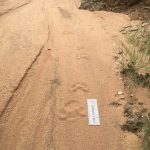
This system recognises that any tracker regardless of experience can make a mistake, especially with difficult tracks, but is still a very good tracker and should be recognised as such. Examples of easy questions are tracks that cannot be confused with anything else perhaps because they are very clear, or of a distinct size. Difficult question may be partly obscured, uncommon or confusable. Very difficult question may be very small, easily confused or ask the candidate to interpret behaviour.
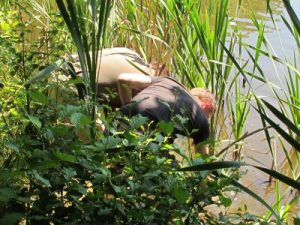
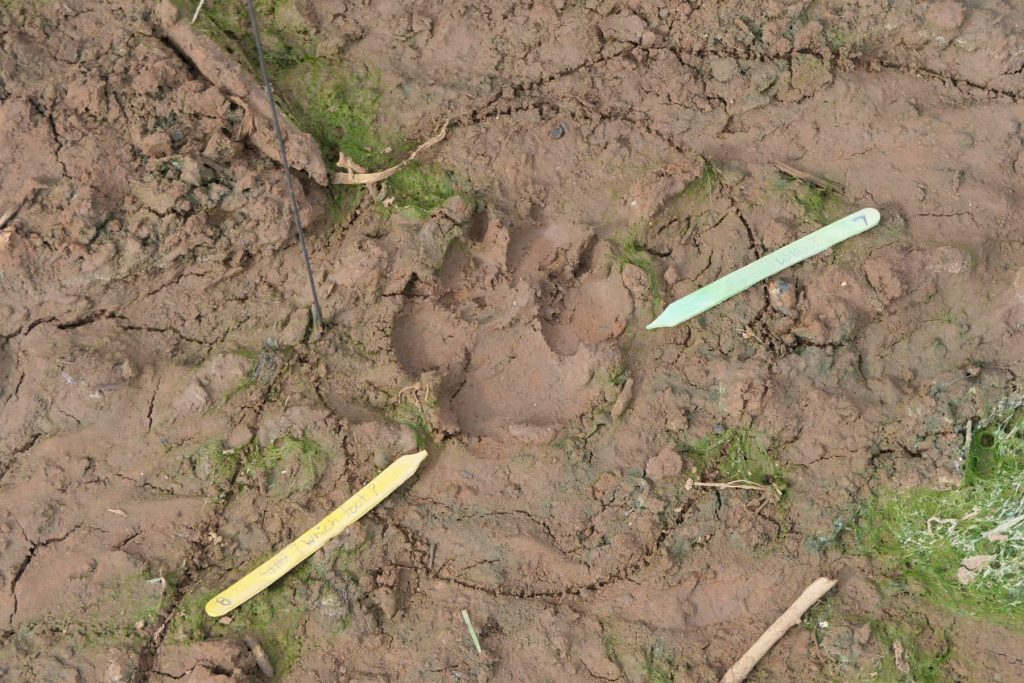
In the standard evaluation there are a good mix of the three levels of question and is conducted by one evaluator. A score of 69%-79% leads to a level 1, 80%-89% a level 2, 90%-99% a level 3 and 100% is a level 4.

The Specialist evaluation follows a similar format except that all the questions are of a difficult/very difficult standard and two evaluators need to be present to quality assure these levels. Scoring a 100% at specialist level gains the candidate the status of track and sign specialist.

The questions are asked to everyone in the group consisting of no more that 10 people and after everyone has given their answer (confidentially), the sign is discussed. This is where a good deal of learning takes place and because of this thorough debrief even someone with no real experience will gain a lot from taking an evaluation. So long as the certification isn’t foremost in the mind the process can be treated like a workshop.

Pretty much anything goes in a track and sign evaluation and questions may be asked on mammals, birds, reptiles, insects or people especially if any of the sign that might be considered by a newcomer as not really tracking, can be confused with wildlife sign.

Trailing evaluation

The trailing evaluation is scored in a similar way and with the same levels recognised, it is also divided into standard and specialist evaluation requiring either one or two evaluators to be present. The main difference is that feedback is given at the end so to undertake an evaluation the candidate really needs to be able to hold the trail to some extent at least to take part. To gain the highest levels in trailing the candidate must guide the evaluator to an animal which should be seen from a reasonably close distance without being alerted.

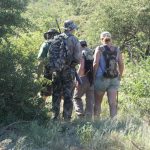
Trailing works on three levels, systematic tracking is following, not necessarily every foot print but enough sign to convince the tracker that the trail is going where he or she thinks it is going. Speculative tracking is employed to “guess” the most likely path taken by the animal and predictive tracking is really about the trackers ability to judge where that animal is on the landscape at that particular moment. Jumping between all of these techniques coupled with a good knowledge of animal behaviour, aging tracks, wind movement and stealth hopefully leads to a close encounter. Two great trailing expressions to hold on to are “trailing is about finding animals, not finding tracks” and “good trailing is about using tracks to confirm where you think the animal is”.

The Tracker certificate

These certificates are awarded to candidates who have taken both track and sign and trailing evaluations. It combines the levels of both but takes the lowest score for certification. A level 2 trailer with a level 3 track and sign would become a level 2 tracker. Should that person up their trailing to level 3 they become a level 3 tracker. A level 4 in both disciplines becomes a Professional Tracker and a specialist in both disciplines becomes a Senior Tracker.

Tracking potential

I believe tracking has great future today in the UK not just as a recreational tool although it is an excellent vehicle to bring people closer to nature. It is currently underused in the field of wildlife monitoring and surveying. This is a shame as there are numerous papers written which can attest to its effectiveness. I will leave you with a story of a recent trip I took to Washington state in the USA to stay with friend and fellow tracker Brian McConnell. We spent a day with Mark Elbroch on one of his mountain lion projects on the Olympic Peninsula which illustrates how traditional skills of tracking can augment modern survey techniques. Mark has a number of lions that are radio collared and so can be tracked by GPS. When signals from the collars are static or clustered it often indicates a kill site. Mark and his team of trackers, myself and Brian on this occasion, spent the day visiting sites of GPS clusters to gather additional information. The format for such visits is as follows, once the area is located traditional tracking skills are employed to gather as much information as possible. The age, health and species of prey animal can be determined. Trails can be followed, and latrines located and scats sampled for DNA. The presence of other animals feeding on the kill can be determined and if the lion was alone or in a group. Locations or the most effective placement of cameras can also be chosen. On this particular occasion it was hugely rewarding to find where the cat had taken a deer out its bed, rolled the deer and then dragged it into the undergrowth to feed.
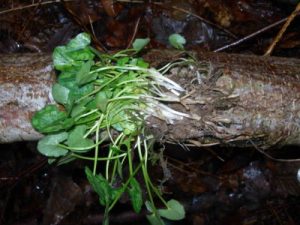
Mark will employ CyberTracker trained trackers over those with academic qualifications such is the strength of the system. This is often not the case in Northern Europe which is a shame considering the evaluation process was designed to test observer reliability.

Quiz

Questions are as follows reading from left to right

Click on the images to expand them

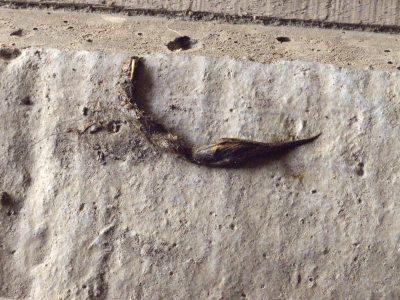
1. Whose track, found under a bridge
2 .Whose track found on heath land
3. Whose track
4. What part of the body
5. Are the tracks to left front or hind
6. Did this hatch or was it predated
7. What animal and how is it moving
8. Whose scat
9. Whose tracks
10. Who lives here
11. Whose tracks
12. Whose tracks

Quiz Answers

I have scored them as if they where evaluation questions just for fun hope you enjoy so you can add points or take them away.

  • Q1 otter difficult +2 -2
  • Q2 Lizard very difficult +3 -1
  • Q3 Crow track difficult +2 -2
  • Q4 Foot very difficult +3 -1
  • Q5 Rabbit front feet very difficult +3 -1
  • Q6 Predated difficult +2 -2
  • Q7 Dog full gallop difficult +2 -2
  • Q8 Goose difficult +2 -2
  • Q9 Natterjack toad very difficult +3 -1
  • Q10 Badger easy +1 -3
  • Q11 Badger easy +1 -3
  • Q12 Dog Easy +1 -3

Useful links

https://www.cybertracker.org

http://trackercertification.com

Thoughts On Debris Shelters

Without doubt ‘shelter’ is one of the prime considerations when spending any time outdoors. Arguably it starts with ensuring you’re properly fed and hydrated, next you may consider that you have adequate clothing to meet the environmental conditions that you find yourself in. Finally, as most people perceive it, somewhere cozy to spend the night or sit and make things or cook, generally ‘a home from home’.

This article is not written as a ‘how to’ article but instead asks questions based around observations of building these types shelter over many years.

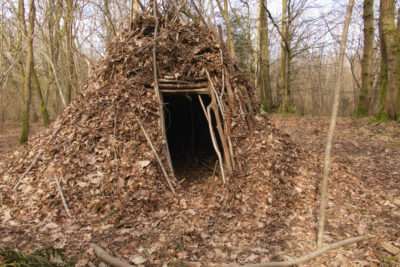
Many of us, myself included, began a study of the subject of bushcraft thinking primarily that shelter, like so many things in the subject was best fashioned from the wilderness around you and anyone out there in a tent wasn’t quite doing it properly. Further, the main natural shelter of choice, at least in my part of the world had to be the debris shelter.  These come in many different shapes and sizes, the general format is a framework of sticks providing the basic shape and outline of the shelter followed by more sticks as rafters tightly packed and generally leaning up against this framework.  The final part of the puzzle consists of piles and piles of leaf mold built up in significant depth against this framework. The amount of leaf mold needed to make the shelter warm but also waterproof is often considerable.
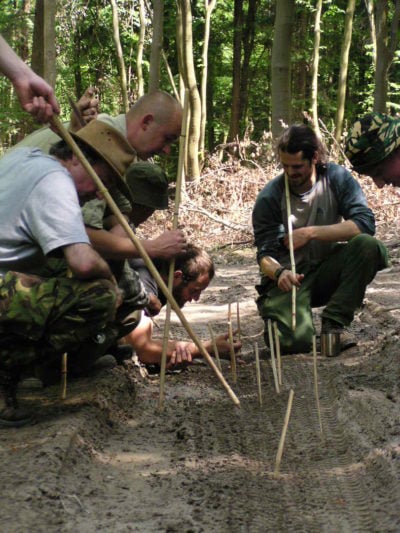
Having built many of these shelters myself and personally witnessed the creation of hundreds on my courses I can’t help wondering if they are really worth all of the effort involved. Not to mention the significant impact they can have on the local environment.

I’m often slightly troubled as frequently these types of debris shelter are described as emergency or survival shelters. If we look very briefly at some of the criteria needed to satisfy shelter requirements in an emergency, we quickly realise that retention of as many calories and as much water as possible would be of prime consideration. Often times the construction of an elaborate debris shelter would seem to go against this concept.  I have often witnessed 6 to 8 people building shelter space sufficient to sleep half that number and spending three or four hours of relatively hard labour to achieve their goal. Assuming a lack of food and water which may occur during an emergency this could be a real issue. You might be lucky if your ‘emergency’ happened in the wintertime after a heavy fall of fresh leaves to form the right thatching the roof of your structure but later in the season when the various  bugs, bacteria and fungi have had their go, this time span of collecting can be seriously extended as there is even less material available.  Add even more time if proper beds are constructed. It would seem, in many situations, one could rapidly find oneself expending more energy building a shelter than is saved from the protection it provides.
I can’t help wondering that it would be better to go into the outdoors armed with the knowledge of how we lose heat to the environment. With this knowledge perhaps, calories and water can be saved by constructing something far less elaborate, perhaps using natural features and more relevant to the immediate environmental threat, instead of walking into the outdoors with several elaborate designs in your head already to deal with any real or perceived misfortune.  Perhaps this could at times be as simple as lighting a really big fire, getting off the cold ground and putting in your back against a natural feature to cut the wind. I can’t help thinking that many of the shelters described in books are better suited to long-term living in the outdoors when this time is planned and not the result of some mishap.

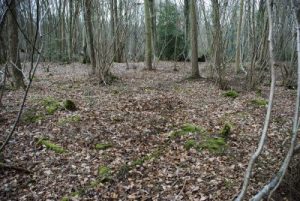
The other side to this mental argument I have is the environmental impact. This is perhaps more relevant for those of us don’t move around during the course of our activities. Maybe it’s running bushcraft and survival courses in the same area, or maybe it’s just the land you have access to and frequently visit. But there is considerable damage done when shelters are repeatedly built in the same location. I also think some sites would be damaged even if used only occasionally.

This damage is especially likely when using leaf mold as thatching. I know it is possible to use other materials for this job however in many areas it is the only material that is available in sufficient quantity. Most other alternatives that spring to mind are likely to be even more environmentally damaging or highly flammable.

Trees form complex relationships with fungal hyphae which bond to the roots of host trees in a symbiotic exchange of nutrients and minerals. These mycorrhizal fungi are often in the top layer of soil and into the leaf mold. Any scraping activities as we gather our roofing materials exposes them to the drying effects of wind and sun and frost.

I’m fairly convinced of the possibility of widespread disruption to invertebrate life, often times the area immediately surrounding a completed shelter is nothing more than mud, with the protective and warming leaf mold layer completely removed. Coupled with the real chance of destroying or disturbing any young seedlings, the impact of a relatively small shelter can be quite extensive.

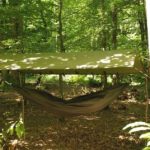
Despite my negative thoughts about the relevance of elaborate shelters and about their impact, it is undeniable that there is a certain satisfaction to be able to walk into a forest with a minimal amount of equipment on your back and fall asleep in front of the fire in a “house” of your own construction. However it does seem that the bulk of my clients when shown the versatility of a simple tarp or tarp and hammock combination tend to stick to these as a lightweight option. With this in mind I often feel quite guilty about teaching the subject because of the amount of time it uses in a course. I cannot help thinking that time might be better spent learning something else.

Spring Greens

Despite the vagaries of the British weather, the sussex plant community seems to carry on regardless with a host of new life pushing through the saturated and often frozen ground.

A walk through a typical broadleaved woodland in February and March may surprise you with the variety of plant life to be found. With a group of students last week in our local woods 16 species were identified over a distance of a few hundred yards, many of which were both edible and medicinal.

With a growing interest in foraging for wild foods it is encouraging to note that many edible plants are not only common but can be found in your own garden without the need to take from the wild as it were. Although it is generally accepted that the flowers, fruit, foliage and fungi, (the four F’s) can be gathered, so long as you have right of access you must have landowners permission to uproot a plant. However it should also be remembered that many plants are extremely rare, often endangered, and may well be protected under the Countryside and Wildlife Act.

Even with permission the responsible forager should look carefully at the local abundance of a species and adjust his or her gathering accordingly. It is more ethical to gather a little over a wide area, perhaps taking a leaf from different individuals rather than complete destruction of the only one around.

I have been out and about myself these last few days discovering in an old farm yard several interesting plant species which makes a tasty addition to the spring menu, some of which are listed below.

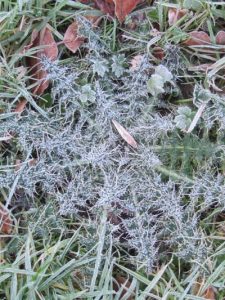
Remarkably abundant are thistles which I always think give good value as all thistles are edible as well as all of the plant. This means roots as well as the parts above ground. The frosted photographic example is a marsh thistle whose leaves can be peeled off its spines and the succulent stems eaten raw. The roots can be fried or boiled and often come in multi-ply strands a little like noodles. This species is a biennial meaning it takes two years to complete its life cycle. Many edibles are in this category and for many it is the root we are after. With biennials it is important to gather the roots at a point when they are the most full of goodness. The first year is spent gathering and storing energy ready for reproduction in the second year, it therefore makes most sense to eat a biennial root at either the end of the first year, or the beginning of the second before the energy is used up. Do bear in mind that uprooting the plant not only require permission but also should be tempered with thoughts of sustainability.

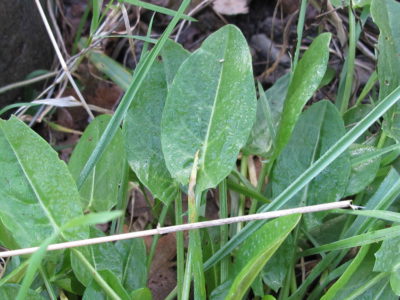
Common Sorrel is also on the menu and at present it is appearing as a rather flat, rosette form. Some people think it looks a little like a dock but the distinction is in the leaf shape with little lobes or auricles at the leaf base. Tasting of apple peel it is a great addition to salads or can be made into a soup as the French are fond of doing.

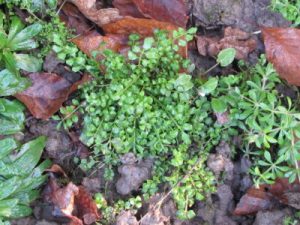
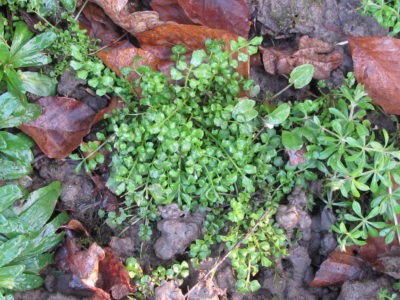
Bittercress can be found in many locations from ancient woodlands to garden walls. This intriguing little plant seems to have two periods of abundance and can be found in quantity in the early spring and then again in the autumn. Its taste is a milder version of water cress and it can be used in the same way. Also look out for its much spicier cousin Ladies Smock which will soon be poking its head out from ditches and damp places.

However you choose to use wild plants please gather with care and always remember we are not the only creatures who rely on plants for our survival.

The Root to a Good Meal

In the wild diet starchy carbohydrates are difficult to find at least in the woods and hedgerows and in any meaningful quantities. A quick glance through any wild food book reveals lots of salad options but few veg to really get your teeth into. Springtime does however reveal energy laden roots and despite the sudden halt in growth caused by the recent cold spell there are still good things to be found.

Lesser celandine is a perfect spring plant and to me a real indicator that things are beginning to change. It is to be found in many locations from ancient woodland to road side banks, as a member of the buttercup family its bright yellow flower can be a great help in identification. It is the starchy root nodules which provide the meal and in this case the root’s appearances lends itself to one of its other common names of pilewort. This description stems from the doctrine of signatures a medicinal belief system whereby plant parts resembling bits of the human body where considered beneficial for that part of the body. Celandine roots where reckoned to be very good for the treatment of haemorrhoids but I will let you make your own mind up about this. Incidentally if you chat to herbalists they would suggest that the doctrine of signatures choose features on the plants which reminded the physician of its effectiveness, perhaps, if this is indeed the case there is more wisdom in this way of thinking than may first appear.

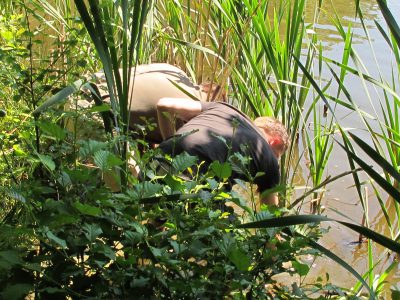
A second great spring root is the cattail often times called bulrush, in fact it’s a year round restaurant and can give a meal at any time of year. It is the rhizome that we would be interested in April. This starchy food store is packed full of good carbohydrate which can be accessed using techniques as simply as heating the rhizomes directly in the fire and then sucking out the starch, or a more involved extraction using hot water, followed by settling it out and drying as a kind of flour. The other great benefit of cattail is its abundance, as a succession plant it is desperate to try to dry up ponds and can be found in huge quantities. This would have been very important to anyone trying to live from the land as many calories can be lost in the pursuit of food.

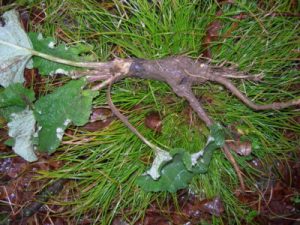
Burdock is another plant which starts to make itself known in the month of April and although all of the plant is edible the leaves are exceptionally bitter. Cooking does remove this bitterness however. The prize of the plant is the root system which even raw is, in my opinion quite delicious. The root can be huge and once the fibrous outer rind is removed can be treated as any root vegetable. It is a biennial plant and should therefore be harvested at the beginning of its second year or at the end of its first, the root will have maximum nutrition at these times. Digging from nice deep and soft soil will also reveal larger roots. It is also possible to burn more calories that can be taken from the plant by digging in a hard or stony area.

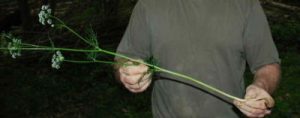
Pignut is a real gem; its feathery foliage is an indicator not only of spring but also ancient woodland. Its below ground parts are of interest to the forager forming a nut similar in texture and taste to sweet chestnut but with a hint of radish.

As with all foraging please seek landowners permission, avoid protected plants and gather from far and wide to so as not to put to much pressure on local populations. After all you may wish to come back for more in the future.

Secrets in Scat

It may well be considered a strange and even bizarre claim to fame but as result of my natural history study and interest. I have, after many years, become the proud (if that’s the right word) owner of a collection of droppings from most of the UK’s land mammal population. While this would seem a weird thing to be collecting I should explain, perhaps, that the tracking of animals involves finding and interpreting the things they leave behind, the most immediately obvious sign of an animals passing, at least to most, would be footprints which are indeed valuable in determining who has been about. Often times however the soil or, notably recently, the weather conditions don’t lend themselves to finding footprints. Droppings however can and do stick around for ages and give a wealth of information about the creatures that left them. There is a very good reason for my collection, honestly, but more of that later.

Firstly it’s useful to think about how animals use their scat in their day to day life. Droppings aren’t always just a means to get rid of unwanted material from the body, they also convey important information about the sex and condition of the animal and are used as territorial markers, many species also use urine to help with this. With this in mind location as well as content can be useful in determining what animals are in your local patch. This is particularly important when some animal droppings start to look very alike and often location gives a big clue to the identification. Deer are a prime example of this; most species have very similar droppings which at this time of year form oval pellets often with a nipple at the end. In the spring with rich diet these clump together and are delightfully called croties. There is a size overlap between species, roe and fallow deer for example but location can help here. Roe are territorial and often leave their droppings in regular spots piled up on their trail, fallow on the other hand tend not to be so fussy and drop them randomly often in their beds after they stand up. There is an important distinction between territory actively defended and home range where an animal might hang out. Territorial animals use droppings and other things as keep off signs. Another example of animals creating latrines are the vole family which leave their dropping at regular spots along their runs often at junctions, rats and mice once again are a little more random.

Other things to look for are content, shape and size, carnivores often have fur, feather and bone in their droppings, which in the case of canines and the mustilids are frequently twisted and tapered. These too can form markers, fox very often deposit scat on high points such as tussocks of grass and at trail junctions to advertise. Incidentally on my wildlife tours to Europe I have seen this many time when tracking wolves. Cats tend to produce sausage shaped dropping which often break into cylinders and badgers due to their predominately earthworm diet often produce a splat (despite being in the weasel family). Frequently this is found in dug latrines but I have on many occasions found badger dung in the middle of a trail. I like to think they perhaps got caught short! One of the most interesting I found was a fresh badger scat in a hole with the intact front feet of a mole sticking out at right angles.

Getting back to the reason for my collection, I have for all of my life been very interested in wildlife and natural history. I have in that time gained a fair knowledge in the area of identifying tracks and sign. A few years ago I became involved in bringing to the UK an international evaluation system for judging the skills of wildlife trackers and I am currently working my way through this system. This has entailed bringing in experts form the USA to test our skills. It became apparent early on that there isn’t a great deal of good information on animal droppings, hard to believe I know. I decided the best option would be to collect examples from known species by using captive animals feed on a natural diet. Armed with this information I was able to examine measure, dare I say smell and create a decent datum point to work from.

So despite the strangeness of my collection and in many ways because of it, I can take you into the countryside and fairly confidently show you the Danish pastry twist of a woodpigeon dropping, the green tic tac of the water vole, the differences between bird pellets and mammal droppings and all manner of secrets and stories contained within scat.

Tracking Basics

When asked to imagine the process of tracking, most of us would conjure a line of footprints stretching off into the distance and a buckskin clad mountain man with his nose to the ground. Occasionally, following animals by the signs they leave behind can be just like this, although you don’t see that much buckskin in the woods of West Sussex. I have been lucky enough to track with some exceptional conservation trackers both at home and abroad and believe the process can be broken down into four basic aspects.

Firstly, it is important that a tracker knows exactly what they are following and also what else may be in the area to either confuse the trail or in some parts of the world lead to danger. Understanding and interpreting tracks and sign is the keystone to becoming a tracker and when taken to a high level, it is entirely possibly to carry out a fairly comprehensive wildlife inventory from the signs left behind by certain insects’ birds, reptiles and mammals. This aspect of tracking includes knowledge of tracks but also any other signs caused by animals during their day to day activities.

Trailing or following a trail can be broken down into two distinct activities depending on circumstance. Without the benefit of local knowledge, a tracker may be forced to systematically track; this entails finding as many footprints or signs on the ground as needed to remain confidently on the trail, the more experienced the tracker the fewer footprints needed allowing him or her to leave the trail picking up the same animal further on, effectively gaining ground.

Predictive trailing is achieved through intimate knowledge of the quarry, its ecology and the landscape and is faster the tracker aiming to predict where the animal has most likely gone. This is a process of deductive reasoning. Firstly, what is the animal? Where is its food source, where does its rest and is it breeding? With this in mind, one can usually determine where it is likely to be at this time of day in the landscape? These questions along with many others often lead a tracker straight to an animal in what can appear to be a magical fashion.

Stalking in to find your quarry is the final piece in the tracking jigsaw and as well as moving quietly and are also checking the wind, the alarm calls of birds and potentially the avoidance of dangerous situations. As a good friend and bear tracker once told me “you have to be sure when the black bear you are following starts running it’s you it has smelled and not the Grizzly bear coming behind you!”

How to light a campfire

The campfire is perhaps the most iconic and desired aspect of outdoor life. Together with the obvious, making food and water safe, fire also acts as a focal point and a morale booster. This latter effect cannot be over stressed especially in the more remote regions of the world. Native Americans believed in an evil being named the Wendigo spirit. It was thought that this spirit would steal your life force and was especially active when the sun began to set and it started to rain. If you have ever had a long tiring day in the woods and experienced these conditions you may have noticed how your energy flags and your spirits sink. Undoubtedly the Wendigo is at work sapping your life force. Happily all you need to do is light a fire to chase him away, and again you may have notice how lighting a fire lifts ones spirits in direct proportion to the height of the flames.

With lighting a fire comes great reasonability and you should only light a fire when you have permission of the landowner. Even when permission is granted, fire in certain situations should be avoided. Do not light fires on peaty soils or soils thick with pine or spruce needles. The fire may travel under ground or though the pine needles without you noticing. Dead roots may also cause similar problems; avoid also lighting fires close to trees or their branches and near or on top of vegetation. Finally never light a fire unless you have the means to put it out.

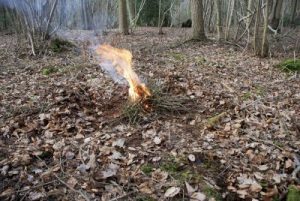
Deciduous woodlands a good place to light a fire as although counter intuitive they are actually quite difficult to burn down. I have provided a quick step by step guide to lighting a small brew fire.

  • Select a site with a mind to minimizing your effects on the environment, an area of leaf mold is ideal.
  • Clear away the leaf mold back to the bare earth
  • Lay down a platform of dead twigs touching each other like a raft so you cannot see the ground. This is to insulate you fire from the cold wet ground.
  • Prepare two bundles of very fine twigs which should look like besom brooms
  • Have your secondary firewood ready ranging in size from the diameter of your little finger upwards to main fuel wood. Bear in mind that for a simple brew fire wrist thick firewood is a little over the top.
  • Have your tinder ready but do not leave it lying around where it can soak up moisture, keep it in your pocket until it is needed.
  • Light your tinder on the platform and place the two twig bundles cross wise over it, for your first go use a match, you can progress to rubbing sticks together later.

Once the twig bundles become established you can load on the various grades of other wood until you are happy it is fit for purpose.

It is important that all of the firewood collected is taken from above the ground. Most months of the year wood from the ground will have soaked up moisture.

Tinder can consist of any fine flammable material and includes things ranging from cotton wool to various tree barks.

Many of use will be familiar with the fire triangle which states fire needs three elements to succeed, heat, fuel and oxygen. I encourage my students to think of it as a fire pyramid because it also needs height. For this reason we keep our initial twig bundles long so we can lay one over the other giving height but also enabling you to keep your hands out of the way.

When the fire is finished with it is important that we clear away thoroughly:

  • Ensure the fire and the ground is completely cold damp it down if necessary.
  • Scrape up all of the ash, charcoal and unburned wood and scatter it thoroughly if several directions. Ensure you have scarped right back to the soil level.
  • Return the leaf mold to its original position disguising the site of your activities.

Nature Is In The Detail

For the last few years the interest in bushcraft and the outdoors has grown immensely to the point where it has almost become an obsession. Constantly I am asked by students where their progression within the subject lies. My answer is always the same; “study nature”. There are no areas within the subject of bushcraft that cannot be enhance and improved by understanding the world around you in more detail.

Some may be obvious, wild plants for food and medicine clearly require correct identification of the species sort. This can be taken further however by understanding the habitat requirements, associations and ecology of the individual species. Is your chosen plant found within a specific national vegetation classification (NVC)? Does a specific fungi have a mycorhizal relationship with a certain tree? The potential for study is almost endless and is something I am convinced our ancestors excelled at. I don’t believe they wandered aimlessly about hoping to stumble on the most useful plants and trees. I believe they read the landscape, the ecology and the relationships in nature and went straight to the areas most likely to provide for their needs.

Awareness and curiosity are key to noticing what grows where and with this comes a wealth of new and helpful knowledge; improvements in locating springs from the local geology, finding animals from identifying suitable habitats and even potentially aiding navigation by understanding landforms.

Studying what the deer is eating at a particular time of year, where they prefer to rest and at what time of day and their behaviour when disturbed. These are just a few of the questions which when answered will improve your tracking skills and can be applied to all the animals you wish to follow.

The connected nature of all living things is often quoted but is still true the deeper you delve into the subject the more this connectivity is revealed and the more understanding you are privy to. In my view this detail is where the serious student of bushcraft needs to focus, excellence does not reside in the latest kit but is found behind the door of the natural world and your curiosity is the key that unlocks it.

Why Learn Latin?

Or, as I am sure some of my students would say, “please, why oh why learn latin..” Latin has been used for the naming of all things natural mainly because it is a ‘dead language’; it is no longer spoken and can therefore no longer evolve and change. The hope being that once something is named in this language it will stay fixed forever.

In theory this is the case,although the powers that be do like to tinker with things and recent research using DNA across the natural world has led to some name changes, as the relationships between organisms are understood more deeply. Generally an organism has two names; the first, a generic name which identifies it to a fairly small group of very similar organisms and the second, a specific which makes the name entirely unique to that particular form. It can be quite difficult to get your head around this naming process but it can be easier if explained using something more familiar. Take cars for example, with Toyota as the generic name which is comparable with Quercus, the latin for Oak. We know there are lots of different Toyotas on the roads just as there are many species of Oak in the forests, around 800 worldwide if memory serves. To get the individual we must be more specific with a specific name, Toyota hilux and Quercus robur we now know that there is only one Toyota hilux just as there is only one Quercus robur or English oak.

But why not just call it an English oak I hear you cry? (actually this is often more of a wail!). The problem with using an English or common name is the variation both regionally or in fact anywhere where English is spoken. Take sycamore for example which most us recognise as Acer pseudoplatinus, a maple with fairly soft wood, great for carving and bow drill fires. To the Americans, the sycamore is a species of plane tree, much denser and used by bow makers as a bow wood. You can start to see how confused this naming business can become without some structure. Together with identifying something exactly, the knowledge of latin can also help when researching skills from other parts of the temperate world. For example does the ‘bow making’ plane tree previously mentioned have the same properties as the London plane tree which is readily available in the UK? It would certainly seem likely and so be worth experimenting with. By studying the real relationships to be found behind the naming of things I have discovered many applications for temperate plants and trees.

Sometimes a little understanding of the meaning of the names can also help with identification. Often the generic name especially with tree and plants is not especially meaningful, but the species name is frequently very useful. Take again our sycamore and plane tree example. The scientific generic name for plane is plantinus – our sycamore is generically Acer, which describes all of the maple family, the specific name pseudo as in ‘false’ and platinus as in ‘plane’. If you compare the leaves of these two species the naming is obvious. Our sycamore looks like a plane but it isn’t hence the ‘false plane’.

Latin can also be used to find out more information about an animal, recently I was looking into the tracks and sign of the weasel. Unable to find the answers to my questions in my English field guides I resorted to some American books, I was only able to find out what I needed to know because I looked for Mustela nivalis and not a different species.

Learning to use Latin can at first seem a daunting prospect but persevere because it can open a whole world of new information and knowledge for the botanist and tracker alike. I know some time in the near future my students will thank me for it!