Practical Ethnobotany and Plant ID – Level 4

Overview

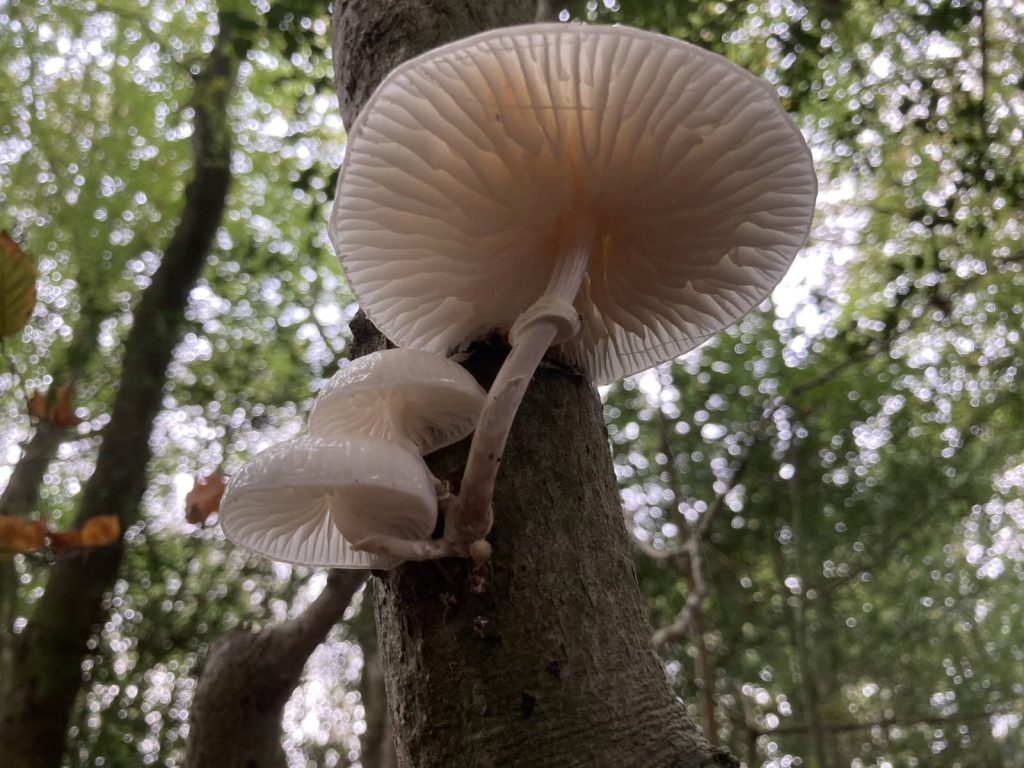
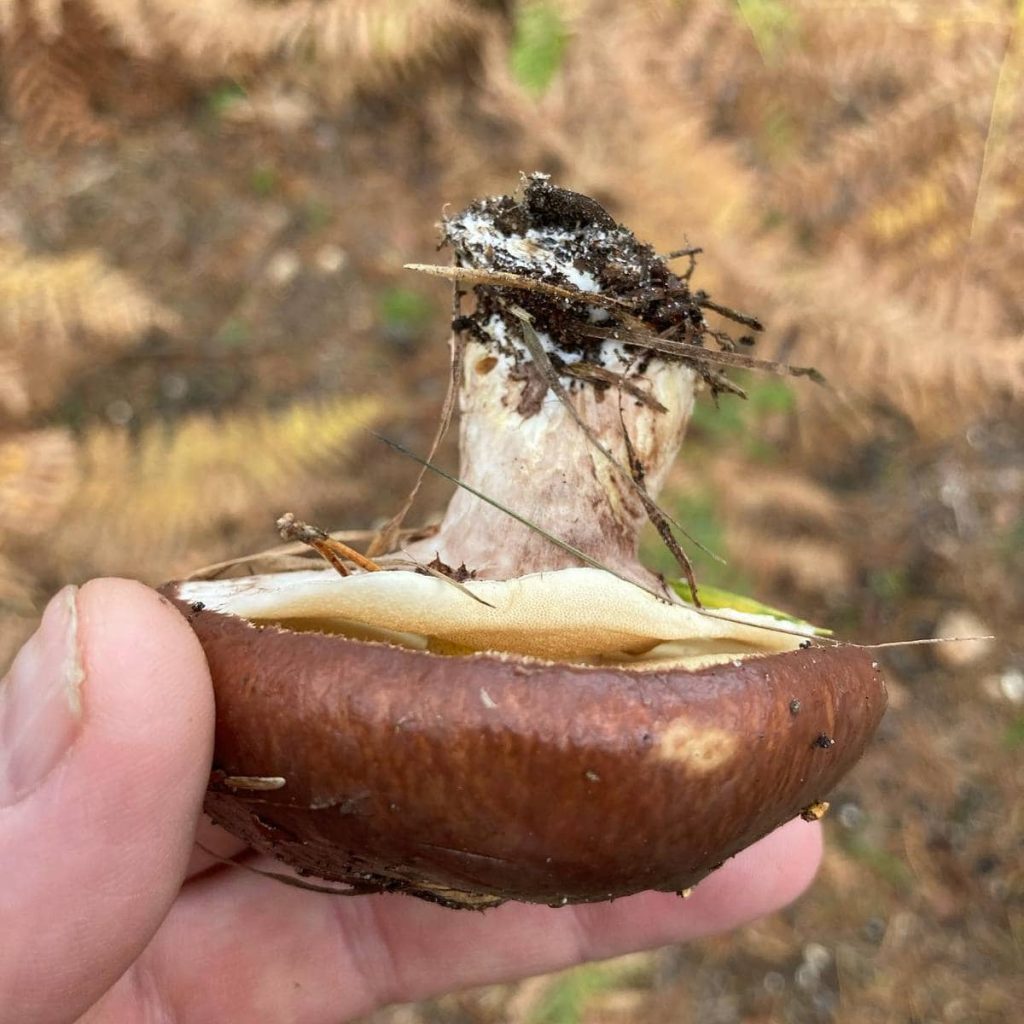
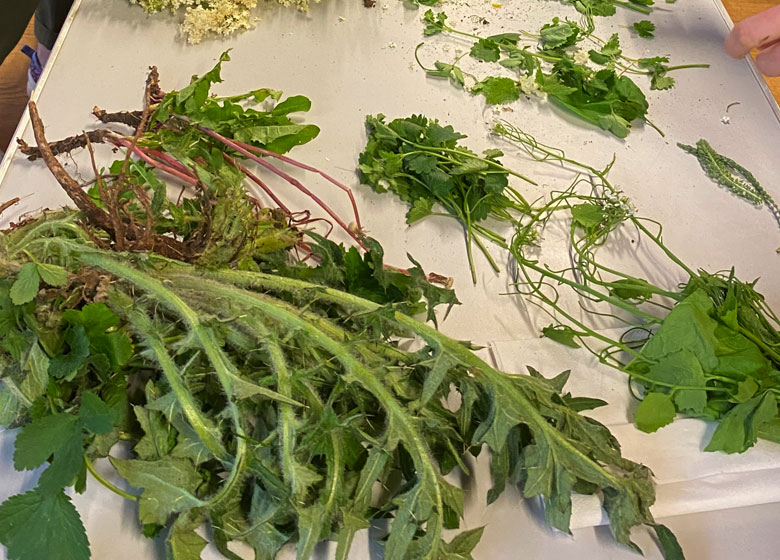
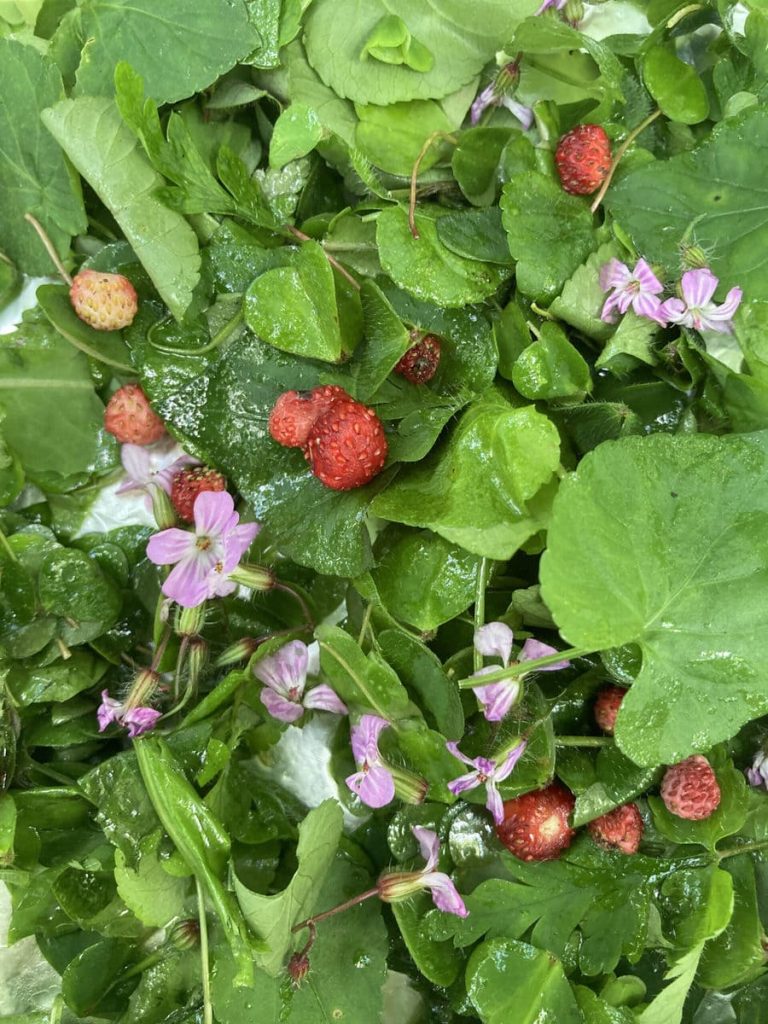
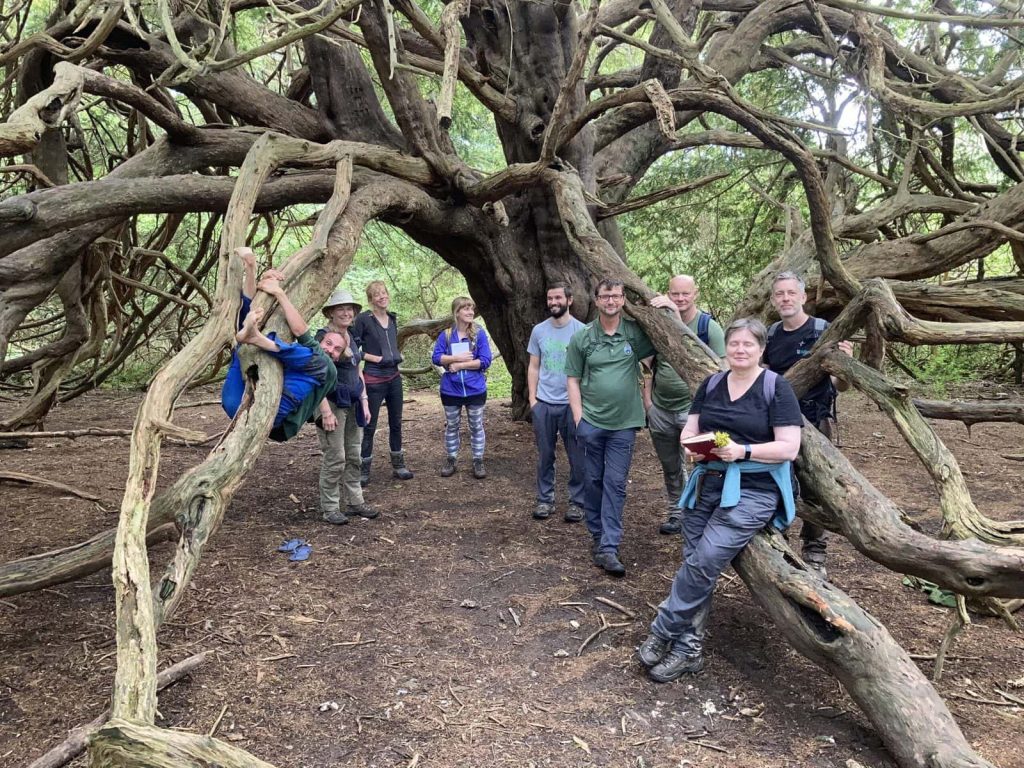
This course delves into the world of plants, trees, and fungi, emphasising both identification and practical uses. It is designed to give students a thorough understanding of species across different habitats, their seasonality, and their applications within bushcraft, wild food, and herbal medicine contexts. While it is not a carving or craft-focused programme, nor a dedicated wild food or herbal medicine course, it explores how plants can be utilised across these disciplines. The course also includes the “Valuing and Managing Veteran Trees” programme, recognising the historical and ecological significance of these ancient trees.

Structured in a series of three-day blocks, the course timetable is arranged to allow students to study and be assessed on species covered in previous sessions. The timing of the blocks is determined by seasonal availability to ensure that students engage with plants and fungi at the most relevant stages of their life cycles.

Course Content

Students will develop skills in identifying and understanding the uses of both coniferous and broadleaved trees throughout the seasons. Study extends to plants found in a variety of habitats including woodlands, wetlands, heathlands, chalk landscapes, and coastal environments. The programme covers fungi, plant history, ecology, woodland heritage, wild foods, and the benefits and limitations of wild medicines and herbal first aid. Additional topics include directional indicators, working with fibres, natural dyes, saps and resins, plant nutrition, plant chemicals and toxins, and species nomenclature.

A strong focus is placed on seasonal variations and how they affect the practical applications of plants. Each block is dedicated to a particular habitat or area of study, with wild foods forming a recurring theme throughout the course. Students will gain confidence in identifying a large number of species to a detailed level, learning through handling, smelling, tasting, and using plants, as our ancestors did. This approach encourages students not only to recognise species but also to understand them, develop practical skills, and form a deeper connection with the natural world.

Ecology and history are also integral parts of the programme, enabling students to recognise relationships within plant and fungal communities. By the end of the course, participants will have a comprehensive understanding of the identification, ecology, and practical uses of a wide range of species across various habitats.

Fees

The cost of this course including certification is £1700. It is possible to pay for this programme in monthly installments.

Catering

Please note this is a self catered course.

Details

As part of the course, we will spend time outdoors on field trips. This may involve walking for extended periods on uneven ground and being in areas without regular toilet facilities, so a reasonable level of fitness and preparedness is recommended. If you have any questions or would like to discuss this further, please feel free to get in touch. This course is led by John Rhyder.

Bookings

Please read the below information before booking.

Please note this is a self catered course and although it is non residential you are welcome to camp at our site if you prefer. It is also possible to arrive the evening before but please call us to discuss this option. There will be some travel to other venues although we will endeavour to car share as much as possible.

NB: Camping is not integral to this programme, it is something we offer for the convenience of our students it is not part of the course fee. With this in mind please be aware that should you choose to stay on site you will be expected to help with the small tasks that facilitate the smooth running of the camp.

You need to be over 18 years of age to attend this programme.

COURSE DATES 2026

15-17 May, 12-14 June, 17-19 July, 14-16 August, 2-4 October, 30 Oct-1 November

If this course is full please contact us to be placed on a waiting list for cancellations.

  • Date: Starts 15th May 2026
  • Location: Near Midhurst West Sussex
  • Start time: 9.00am
  • Finish time: 5.00 pm
  • Course leader: John Rhyder
  • Course size: 12 (Maximum)
  • Cost per person: £1700
3 Places

Certification

The award level is set at level 4 by using national benchmarks. Successful candidates will receive a certificate in Practical Ethnobotany and Plant Identification. We will be using the NCFE IIQ to underscore the quality of this programme. In addition we also provide a Woodcraft School certificate.

Levels

The level of our programmes implies the degree of work needed to be done by the student to achieve certification. Our awards are generally set at level 3 and 4 but this does not imply that levels below these benchmarks are needed prior to joining a course.  Guidelines as to the complexity of the levels can be found here.

Assessment

The assessment process consists of a series of identification tests and the completion of both a plant and a tree herbarium with accompanying notes. The course leader will also keep a record of observation of the student carrying out and completing practical tasks. If you have any questions or would like more information about this course, please feel free to contact us for an informal chat.
COURSE REVIEWS

I can’t recommend this course enough. It’s been a really rewarding experience for me and I’ve walked away with not only a qualification I feel proud of but also lots of inspiration to carry on learning and precious new friends to share future learning with! It’s been really eye opening and probably life changing learning more about all the plants, trees, fungi throughout the seasons but there’s also a really refreshing balance of doing hands on practical things with the opportunity to experiment and learn together as a group.

Steffi Gunther

Very informative course taught by an experienced teacher. Although there is a lot of information to absorb over the 7 months, the course is taught in a clear structured way; each module is reflective of the seasons and builds on the previous one. The mix of theory and practical work is just right. Alongside the main learning outcomes, John is very open to questions, providing nuggets of info and wisdom along the way.

Dan Martin

The course was beautifully paced around the seasons. We entered the woods before the first leaves appeared and the course concluded as the leaves were beginning to fall. This ensured that we were able to cover the broadest possible range of plants and trees with the objective of understanding the importance of being able to ID species throughout their life cycles. Whilst the assessments, both the coursework and ID tests, were challenging and required commitment to complete successfully, I found the pressure to study and revise really helped to cement the knowledge in my mind. Both John and Phil were really happy to answer questions and to talk around subjects, rather than just sticking to a script, which I think is the mark of true experts. It was a privilege to spend time with them.

Christopher Collins

The course is fun and engaging with an appropriate level of challenge that pushes you out of your comfort zone, enabling you to deepen your connection with and understanding of our vegetatal, arboreal and mycological friends. The veteran trees we went to visit were truly awe inspiring. The mix of fieldwork, practical uses and scientific theory is in perfect balance, with plenty of opportunities to observe and collect plants and fungi in different stages of growth across the seasons and in different habitats.

Jill Ferguson

This was an amazing course, I learned so much about trees and plants and their uses both practically and medicinally, it has really enhanced my knowledge and connection with nature. I have had a passionate interest in herbalism for some years but limited experience in identifying the plants confidently in the wild, this course expanded my knowledge of plants and more importantly enabled me to identify them confidently and know them more intimately.

Sonya Keating

As a complete beginner I found the whole course fascinating and a wonderful introduction to the world of plants, and practical ethnobotany. I was quite nervous before starting as I knew so little, but your teaching style is easy and engaging with a great focus on practical and observational skills.The structure over a year is perfect for learning about plants through the seasons and the course work forces you to get to grips with the basics which gives you a great foundation of knowledge. I look at the natural world differently now, and will continue to apply what I have learnt every time I am out for a walk.

Sophia Merchandani

What an amazing course with over 20yrs professional Arboricultural experience I feel like I can finally call myself a woodsman! This course reminded me of the joys and necessity of researching and looking at the finer details of trees & plants for identification! John and Phil’s expert knowledge, great tuition in this subject gives you a great depth of knowledge in edible, medicinal and practical uses of trees, plants & fungi from woodland to coastal habitats which is an eye opener on how many edible and medicinal plants surround us and are at our finger tips.

Glenn Russell

I’d like to say a huge thank you for all the time and energy you put into running the ethnobotany course this year. It has been fascinating, inspiring and challenging, as well as a lot of fun to take part in. I’m sure you’ll see me in the woods for another of your courses some time soon.

Hannie Vogler

This course was everything that I could have hoped for and more. Knowledge of plants, trees and the natural materials around us sits at the heart of outdoor living and completing this course will give you a comprehensive base for your learning in these areas. Having limited ID skills coming onto the course it was incredibly useful to have John and Phil’s encyclopedic knowledge and quality tuition there to ‘bridge the gap’ from just reading about trees and plants in text books to ‘knowing’ well over a hundred on an intricate level.

Jack Watson

Not only have I come away with new knowledge, friends and skills, but also a deeper respect for the many ways in which plants, trees and fungi can lend themselves to a myriad of different uses. From medicine, fire, craft and (not forgetting!) food, to name but a few, you have emphasized how every season can provide a rich bounty. It’s an absolute pleasure to recommend this course to others, it’s brilliant to see something on Ethnobotany which isn’t purely academic. I also loved how you recognized limits to your own knowledge and called in experts in certain fields to ensure we had a well-informed, balanced experience.

Lucy O'Hagan

This was a truly incredible course, offering lots of opportunities to consolidate the wide breadth of information covered. The mix of practical, craft based learning and scientific theory kept things interesting, useful, and engaging. The method of assessment was great, as it mixed seasonal and habitat based ID tests with documented evidence of learning, and tree and plant herbariums which make useful resources for the future. I have never been on such a useful fungi course, which provided an excellent ID overview.

Jess Rickenback

I completed this course in 2015 and found it fascinating, discovering many new skills that I would never otherwise have come across and that I will go on to develop further. However we didn’t just learn these as a dry list of names we learnt about their traditional uses; cooking, medicine, construction, toolmaking as a few examples. We then tried these uses for ourselves, collecting plants and cooking with them, making medicinal tinctures and trying traditional crafts such as dyeing, papermaking and barkwork. These experiences have enabled me to talk about our native plants with much more depth of knowledge than just knowing their names and has also very much helped prepared me for an Ecology course.

Sarah George

For anyone wishing to have an in-depth knowledge of UK flora and habitats I would highly recommend doing woodcraft schools ethnobotany course. Field trips cover a variety of different habitats and species which grow on them. Edible, medicinal and natural history are covered also. You learn about medicinal properties of plants and try those too. You learn, discover and practice the uses for a whole plant, and this course covered several hundred of them. John and Tim both have a massive knowledge in this subject, and have a very down to earth and unique style of teaching.

Kevin Howlett

The course has enhanced my understanding of the plants and their environments, their past and present uses, and given me experience of working with them in a number of different ways, both practical and medicinal. I have thoroughly enjoyed each attendance as we have followed the seasons from spring to winter, and now find wherever I am my eyes are constantly drawn to the hedgerows, verges and foliage, looking for things of interest with a new understanding.

Graham Couling


Tags: