Ancient Sentinels

This article was originally published in The Bushcraft & Survival Skills Magazine

Ancient Sentinels

I have always been drawn to trees, fascinated I suppose by their aura of permanence.  Many species if allowed can live to a very great age, theoretically trees can carry on living almost indefinitely so long as they do not succumb to disease or damage.

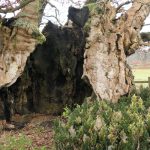
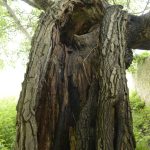
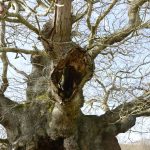
In the UK we have more ancient and veteran trees than anywhere else in Europe. However veteran tree is not necessarily old, and many young trees have veteran features.  One definition of a veteran tree I particularly like is “a tree suffering from the rigours of life”.  Generally speaking, this means that the individual tree will have holes, cavities, flaking bark and all manner of features that to the uninitiated may look like the tree is in imminent danger of collapse. In some instances, this may indeed be the case but trees that are growing old gracefully and naturally do have strategies for dealing with the decline in their general structural and physiological vigour.
How trees age.

There is a saying that an oak tree spends 300 years growing, 300 years living and 300 year slowly dying. And this may be true although it may be difficult to say for sure how exactly a trees live cycle fits in with the passing of time. Partly this is because they travel the centuries in what are effectively eons compared with our own short journeys and also because in much of northern Europe they are messed with. Frequently ancient trees have removed for safety reasons or been swamped by faster growing trees. It can be hard therefore for us to be sure exactly where trees would end up naturally.

Not all tree species are equipped for a long-life, a birch, unlike an oak invests much less energy in growing slowly and harbouring its resources for times of trouble instead adopting a rock and roll lifestyle living fast and dying young. Their roll in the ecosystem is that of a pioneer, colonising open ground and creating a forest environment. If they reach a century they are doing well.

There are exception and some tree species behave differently but generally speaking when a tree is young it spends its time gathering energy and using that energy to grow tall and become a canopy tree. It can then set seed and reproduce itself, there is little point in carrying on growing once the canopy is achieved as being taller makes for exposure to wind and also leads to problems with water and nutrient uptake among others.

All trees are capable of rapid growth but taking a slower attitude to life and harbouring some of that energy for a rainy day, so to speak, means that options exist for surviving lean, drought years or fending off defoliation insects or having energy to seal of infection from bacteria and fungi.

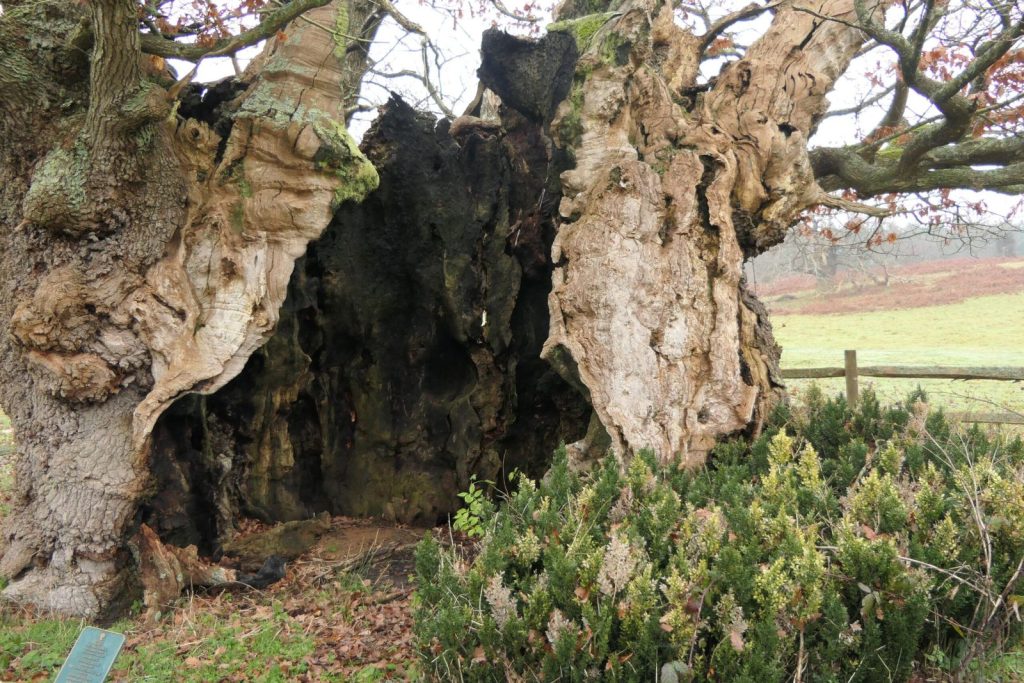
Once a tree that through more conservative lifestyle choices, reaches a certain height and maturity it begins a process known as retrenchment. Essentially this involves the dying back of the upper crown while a smaller secondary crown forms lower down. This can often be seen in many older oaks throughout the country. It may be caused also by damage to the tree but is normally recognisable by the obvious thinning of the upper branches but the lower ones still being dense and hard to see through. At the same time the tree will also become hollow with the aid of helpful fungi and then send aerial roots into its own rotted heartwood and eat itself. These aerial roots can in some instances form a separate plumbing system to the lower crown branches that become effectively smaller versions of the adult tree. For this reason, they are known as reiterant trees.

Oaks become known as stag headed as the upper crown eventually disappears leaving on the desiccated heartwood of the older canopy in the form of the spiny wood so highly prized by cold bushcraft practitioners and log merchants alike.

A short squat hollow structure frequently survives gales and storms better that a young tall and perhaps more vigorous tree. The Elisabeth oak at Cowdray Park in West Sussex is very short and very wide and has survived the century’s despite being in a relatively exposed position in the remnants of old wood pasture.

Some species do not die back slowly and instead do it all on one dramatic effort. Beech are example of this and will often snap themselves in half or even lower and then carry on for many decades on a much-reduced canopy. This, together with summer branch drop, is one reasons why mature beech trees can be dangerous to camp under.

I have seen this mechanism in action across the northern hemisphere and in primary forests of the pacific Norwest of America and with conifers as well as broadleaved trees.

One of the reasons we in the UK have so many ancient trees is due to management systems that exploit the tree regenerative power to keep re growing and the retrenchment mechanism. Once the crown is lost then the tree will send up reiterant versions of itself from dormant buds if this happens low down it results in a coppice stool if higher up it creates a pollard.

This pollarding creates the hollowing out seen in ancient trees but when is done in a regular cycle effectively restarts the tree again creating specimens that may live many times longer than an unmanaged tree. It is possible to find pollard oaks in Windsor great park that are described in the doomsday book of 1086. Presumably they at that time large enough to be noteworthy and so already a fair bit older than the 900-year life span credited to an oak tree.

In years gone management by pollarding was quite extensive with the new growth from the pollards kept above the height of grazing animal which could be run underneath as a kind of early permaculture. Periodic cutting of the branches provided fodder and timber and re invigorated the tree in an almost endless cycle. The landscape produced, known as wood pasture, is a form of woodland and very old and increasingly rare. There are exemptions but many surviving woodlands of this type are now sparsely stocked and often have no “new” ancients waiting to replace the old when they finally succumb.

Benefits of ancient trees

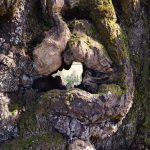
An ancient tree be it a pollard or a more naturally declining individual is a living ecosystem in its own right. Supporting an amazing array of species not just those that use the inevitable holes and cavities found in these trees, but also are host to range of specialists found only here. These include fungi which also help with the hollowing out process, saproxylic beetles whose larvae live in the wood pulp in the hollow steams and bryophytes finding a foothold in the cracks, crevices and bumps inevitable on an ancient tree.  Many of these species are threatened and are red data book listed.

Some of the insects associated with these trees are particularly vulnerable as the adults need nectar and therefore flowering plants close by this would of course have been provided in the pastures of yesteryear. It could be possible that such specialist requirements of ancient hollowing trees and land open enough to support flowering plants support the theory of Frans Vera that our ancient pre managed forests where a much more open savannah type of growth with pockets of woodland and pastures kept open by grazing animals.

Ancient and veteran trees also link us to our own social history we have perhaps all heard of the major oak, hiding place of Robin Hood, or the Sycamore tree that the Tolpuddle martyrs met under. You may also find tree history local to you, the Elisabeth oak mentioned early is rumoured to have been named after Queen Elisabeth the 1st . According to one story she shot a stag from under its shade with a longbow during a visit to Cowdray estate. This tree is a ten-minute drive from where I live.
Threats to ancient trees.

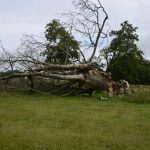
Ancient and veteran trees are of lower vigour than the youngsters just embarking on life. The biggest threat to them is often overshadowing by younger more vigorous trees, often twisted and gnarled they may have been left in forests as being more trouble that they are worth to fell. Consequent replanting, often with fast growing conifers, sees them frequently struggling for light and therefore food. Carefully planning is required to release these trees as sudden exposure to sunlight and wind by the removal of competition can open them up to forces, that they cannot deal with.

Compaction is also an issue people cattle and machines with too much access to the roots particularly when the ground is soft can force the air out of the soil and in extreme situations kill the tree.

Livestock can also skin the bark from exposed roots and strip the bark from the truck itself, I have seen hollows opened up by cattle and the wood pulp scattered. From an ecological perspective and intact cavity full of wood mulch is much more valuable than an empty one.

Tidying up excessively is also potentially damaging, trees often gently lower branches either through just growing down or by partially breaking. These can act as support to the tree and may even root and great another specimen. Yew trees do this regularly, Kingley vale in West Sussex is the biggest yew forest The UK and possibly Europe and has some specimens that could be 2000 years old according to some estimations. They regularly drop branches in support and these also root. This leads to an obvious thought that the old trees may also have once been rooted branches, so on back perhaps as far as the last ice age. Could it be that these ancient wanders have been marching across our landscape for 8000 years making even the slowest of Ents appear hasty?

Removing these untidy falling branches robs the tree of support and perhaps confines to the life in the same location.

Anything that does fall from the tree should be stacked in close proximity as intermediate habitat. When veteran trees finally succumb, they should also not be removed. The importance of deadwood in conservation cannot be overstated.

Changes in land management and fears of safety have unfortunately left us with perhaps a more serious threat that any listed above. There are very few if any areas where veteran trees are being created to replace the old ones. Even should this change we still face a big age gap; we may have new trees encouraged and old veteran trees falling apart but nothing in between. The associated rare species do not travel great distances and having one old tree in a landscape devoid of other trees also aged or aging doesn’t bode well for its inhabitants.

It is possible to fill the gap to some extend at least temporarily by veteranizing young trees to create the habitat. For all the students I have taught the essential principles of proper pruning I apologise now.  Veteranizing trees involves practices designed to make the tree suffer the rigours of life before it is perhaps ready. This include bark removal, snapping branches to create ragged snags for over wintering insects and bats roosts and in extreme situation as resulted in the blowing up of the crown with dynamite. I was involved many year ago with some of this work in Windsor great park when I taught arboriculture at Merrist Wood College. Under the guidance of the remarkable Ted Green, a founder of the ancient tree forum, we snapped of branches using winches and even feel huge trees and then winched them upright and connected them to living trees with cargo straps to make standing deadwood. All of this was very experimental 30 years ago which to give him credit just shows how forward think Ted was.

One of the saddest things about our trees is our own attitude towards them, we would not hesitate to protect a man-made ancient monument with the full force of the law. Unfortunately, the needs of a tree which may be centuries older is often overlooked.

Something we should remember when building high speed rail links and roads and houses, to walk under ancient trees in ancient forests is to walk in the footsteps of wolves, bears and lynx.  It is to follow hunter gathers,  Celts and Romans and all the other wildlife and races that have come and gone since and is irreplaceable.
Thoughts On Debris Shelters

Without doubt ‘shelter’ is one of the prime considerations when spending any time outdoors. Arguably it starts with ensuring you’re properly fed and hydrated, next you may consider that you have adequate clothing to meet the environmental conditions that you find yourself in. Finally, as most people perceive it, somewhere cozy to spend the night or sit and make things or cook, generally ‘a home from home’.

This article is not written as a ‘how to’ article but instead asks questions based around observations of building these types shelter over many years.

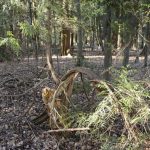
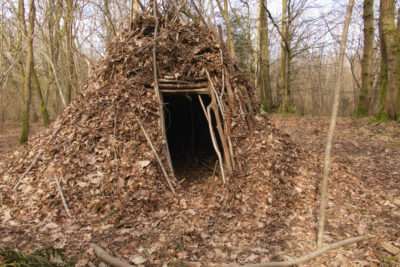
Many of us, myself included, began a study of the subject of bushcraft thinking primarily that shelter, like so many things in the subject was best fashioned from the wilderness around you and anyone out there in a tent wasn’t quite doing it properly. Further, the main natural shelter of choice, at least in my part of the world had to be the debris shelter.  These come in many different shapes and sizes, the general format is a framework of sticks providing the basic shape and outline of the shelter followed by more sticks as rafters tightly packed and generally leaning up against this framework.  The final part of the puzzle consists of piles and piles of leaf mold built up in significant depth against this framework. The amount of leaf mold needed to make the shelter warm but also waterproof is often considerable.

Having built many of these shelters myself and personally witnessed the creation of hundreds on my courses I can’t help wondering if they are really worth all of the effort involved. Not to mention the significant impact they can have on the local environment.

I’m often slightly troubled as frequently these types of debris shelter are described as emergency or survival shelters. If we look very briefly at some of the criteria needed to satisfy shelter requirements in an emergency, we quickly realise that retention of as many calories and as much water as possible would be of prime consideration. Often times the construction of an elaborate debris shelter would seem to go against this concept.  I have often witnessed 6 to 8 people building shelter space sufficient to sleep half that number and spending three or four hours of relatively hard labour to achieve their goal. Assuming a lack of food and water which may occur during an emergency this could be a real issue. You might be lucky if your ‘emergency’ happened in the wintertime after a heavy fall of fresh leaves to form the right thatching the roof of your structure but later in the season when the various  bugs, bacteria and fungi have had their go, this time span of collecting can be seriously extended as there is even less material available.  Add even more time if proper beds are constructed. It would seem, in many situations, one could rapidly find oneself expending more energy building a shelter than is saved from the protection it provides.

I can’t help wondering that it would be better to go into the outdoors armed with the knowledge of how we lose heat to the environment. With this knowledge perhaps, calories and water can be saved by constructing something far less elaborate, perhaps using natural features and more relevant to the immediate environmental threat, instead of walking into the outdoors with several elaborate designs in your head already to deal with any real or perceived misfortune.  Perhaps this could at times be as simple as lighting a really big fire, getting off the cold ground and putting in your back against a natural feature to cut the wind. I can’t help thinking that many of the shelters described in books are better suited to long-term living in the outdoors when this time is planned and not the result of some mishap.

The other side to this mental argument I have is the environmental impact. This is perhaps more relevant for those of us don’t move around during the course of our activities. Maybe it’s running bushcraft and survival courses in the same area, or maybe it’s just the land you have access to and frequently visit. But there is considerable damage done when shelters are repeatedly built in the same location. I also think some sites would be damaged even if used only occasionally.

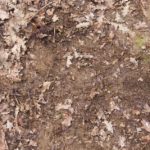
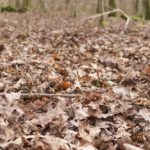
This damage is especially likely when using leaf mold as thatching. I know it is possible to use other materials for this job however in many areas it is the only material that is available in sufficient quantity. Most other alternatives that spring to mind are likely to be even more environmentally damaging or highly flammable.

Trees form complex relationships with fungal hyphae which bond to the roots of host trees in a symbiotic exchange of nutrients and minerals. These mycorrhizal fungi are often in the top layer of soil and into the leaf mold. Any scraping activities as we gather our roofing materials exposes them to the drying effects of wind and sun and frost.

I’m fairly convinced of the possibility of widespread disruption to invertebrate life, often times the area immediately surrounding a completed shelter is nothing more than mud, with the protective and warming leaf mold layer completely removed. Coupled with the real chance of destroying or disturbing any young seedlings, the impact of a relatively small shelter can be quite extensive.

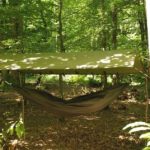
Despite my negative thoughts about the relevance of elaborate shelters and about their impact, it is undeniable that there is a certain satisfaction to be able to walk into a forest with a minimal amount of equipment on your back and fall asleep in front of the fire in a “house” of your own construction. However it does seem that the bulk of my clients when shown the versatility of a simple tarp or tarp and hammock combination tend to stick to these as a lightweight option. With this in mind I often feel quite guilty about teaching the subject because of the amount of time it uses in a course. I cannot help thinking that time might be better spent learning something else.

Spring Greens

Despite the vagaries of the British weather, the sussex plant community seems to carry on regardless with a host of new life pushing through the saturated and often frozen ground.

A walk through a typical broadleaved woodland in February and March may surprise you with the variety of plant life to be found. With a group of students last week in our local woods 16 species were identified over a distance of a few hundred yards, many of which were both edible and medicinal.

With a growing interest in foraging for wild foods it is encouraging to note that many edible plants are not only common but can be found in your own garden without the need to take from the wild as it were. Although it is generally accepted that the flowers, fruit, foliage and fungi, (the four F’s) can be gathered, so long as you have right of access you must have landowners permission to uproot a plant. However it should also be remembered that many plants are extremely rare, often endangered, and may well be protected under the Countryside and Wildlife Act.

Even with permission the responsible forager should look carefully at the local abundance of a species and adjust his or her gathering accordingly. It is more ethical to gather a little over a wide area, perhaps taking a leaf from different individuals rather than complete destruction of the only one around.

I have been out and about myself these last few days discovering in an old farm yard several interesting plant species which makes a tasty addition to the spring menu, some of which are listed below.

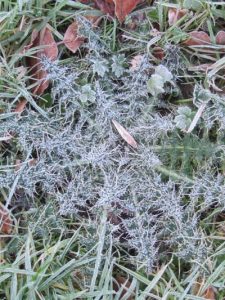
Remarkably abundant are thistles which I always think give good value as all thistles are edible as well as all of the plant. This means roots as well as the parts above ground. The frosted photographic example is a marsh thistle whose leaves can be peeled off its spines and the succulent stems eaten raw. The roots can be fried or boiled and often come in multi-ply strands a little like noodles. This species is a biennial meaning it takes two years to complete its life cycle. Many edibles are in this category and for many it is the root we are after. With biennials it is important to gather the roots at a point when they are the most full of goodness. The first year is spent gathering and storing energy ready for reproduction in the second year, it therefore makes most sense to eat a biennial root at either the end of the first year, or the beginning of the second before the energy is used up. Do bear in mind that uprooting the plant not only require permission but also should be tempered with thoughts of sustainability.

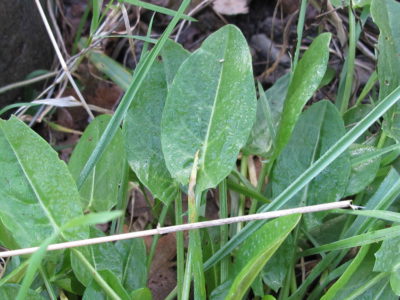
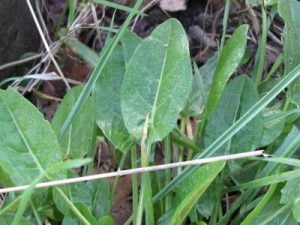
Common Sorrel is also on the menu and at present it is appearing as a rather flat, rosette form. Some people think it looks a little like a dock but the distinction is in the leaf shape with little lobes or auricles at the leaf base. Tasting of apple peel it is a great addition to salads or can be made into a soup as the French are fond of doing.

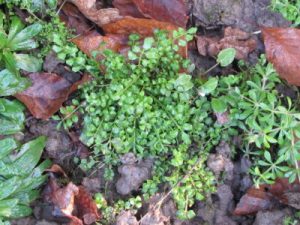
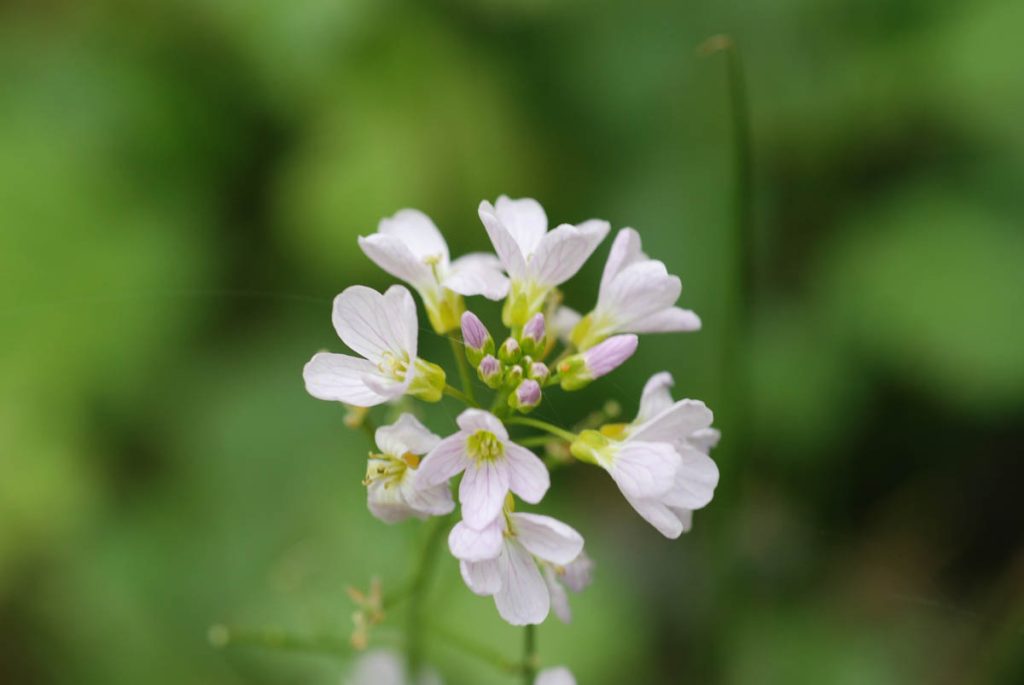
Bittercress can be found in many locations from ancient woodlands to garden walls. This intriguing little plant seems to have two periods of abundance and can be found in quantity in the early spring and then again in the autumn. Its taste is a milder version of water cress and it can be used in the same way. Also look out for its much spicier cousin Ladies Smock which will soon be poking its head out from ditches and damp places.

However you choose to use wild plants please gather with care and always remember we are not the only creatures who rely on plants for our survival.

The Root to a Good Meal

In the wild diet starchy carbohydrates are difficult to find at least in the woods and hedgerows and in any meaningful quantities. A quick glance through any wild food book reveals lots of salad options but few veg to really get your teeth into. Springtime does however reveal energy laden roots and despite the sudden halt in growth caused by the recent cold spell there are still good things to be found.

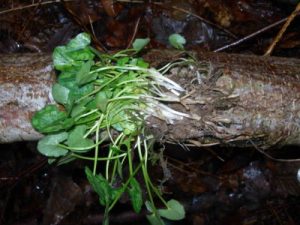
Lesser celandine is a perfect spring plant and to me a real indicator that things are beginning to change. It is to be found in many locations from ancient woodland to road side banks, as a member of the buttercup family its bright yellow flower can be a great help in identification. It is the starchy root nodules which provide the meal and in this case the root’s appearances lends itself to one of its other common names of pilewort. This description stems from the doctrine of signatures a medicinal belief system whereby plant parts resembling bits of the human body where considered beneficial for that part of the body. Celandine roots where reckoned to be very good for the treatment of haemorrhoids but I will let you make your own mind up about this. Incidentally if you chat to herbalists they would suggest that the doctrine of signatures choose features on the plants which reminded the physician of its effectiveness, perhaps, if this is indeed the case there is more wisdom in this way of thinking than may first appear.

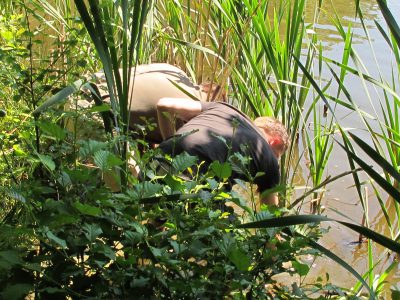
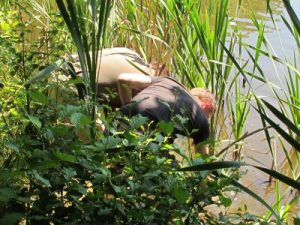
A second great spring root is the cattail often times called bulrush, in fact it’s a year round restaurant and can give a meal at any time of year. It is the rhizome that we would be interested in April. This starchy food store is packed full of good carbohydrate which can be accessed using techniques as simply as heating the rhizomes directly in the fire and then sucking out the starch, or a more involved extraction using hot water, followed by settling it out and drying as a kind of flour. The other great benefit of cattail is its abundance, as a succession plant it is desperate to try to dry up ponds and can be found in huge quantities. This would have been very important to anyone trying to live from the land as many calories can be lost in the pursuit of food.

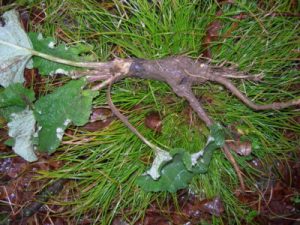
Burdock is another plant which starts to make itself known in the month of April and although all of the plant is edible the leaves are exceptionally bitter. Cooking does remove this bitterness however. The prize of the plant is the root system which even raw is, in my opinion quite delicious. The root can be huge and once the fibrous outer rind is removed can be treated as any root vegetable. It is a biennial plant and should therefore be harvested at the beginning of its second year or at the end of its first, the root will have maximum nutrition at these times. Digging from nice deep and soft soil will also reveal larger roots. It is also possible to burn more calories that can be taken from the plant by digging in a hard or stony area.

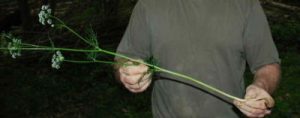
Pignut is a real gem; its feathery foliage is an indicator not only of spring but also ancient woodland. Its below ground parts are of interest to the forager forming a nut similar in texture and taste to sweet chestnut but with a hint of radish.

As with all foraging please seek landowners permission, avoid protected plants and gather from far and wide to so as not to put to much pressure on local populations. After all you may wish to come back for more in the future.

Nature Is In The Detail

For the last few years the interest in bushcraft and the outdoors has grown immensely to the point where it has almost become an obsession. Constantly I am asked by students where their progression within the subject lies. My answer is always the same; “study nature”. There are no areas within the subject of bushcraft that cannot be enhance and improved by understanding the world around you in more detail.

Some may be obvious, wild plants for food and medicine clearly require correct identification of the species sort. This can be taken further however by understanding the habitat requirements, associations and ecology of the individual species. Is your chosen plant found within a specific national vegetation classification (NVC)? Does a specific fungi have a mycorhizal relationship with a certain tree? The potential for study is almost endless and is something I am convinced our ancestors excelled at. I don’t believe they wandered aimlessly about hoping to stumble on the most useful plants and trees. I believe they read the landscape, the ecology and the relationships in nature and went straight to the areas most likely to provide for their needs.

Awareness and curiosity are key to noticing what grows where and with this comes a wealth of new and helpful knowledge; improvements in locating springs from the local geology, finding animals from identifying suitable habitats and even potentially aiding navigation by understanding landforms.

Studying what the deer is eating at a particular time of year, where they prefer to rest and at what time of day and their behaviour when disturbed. These are just a few of the questions which when answered will improve your tracking skills and can be applied to all the animals you wish to follow.

The connected nature of all living things is often quoted but is still true the deeper you delve into the subject the more this connectivity is revealed and the more understanding you are privy to. In my view this detail is where the serious student of bushcraft needs to focus, excellence does not reside in the latest kit but is found behind the door of the natural world and your curiosity is the key that unlocks it.