Spring Greens

Despite the vagaries of the British weather, the sussex plant community seems to carry on regardless with a host of new life pushing through the saturated and often frozen ground.

A walk through a typical broadleaved woodland in February and March may surprise you with the variety of plant life to be found. With a group of students last week in our local woods 16 species were identified over a distance of a few hundred yards, many of which were both edible and medicinal.

With a growing interest in foraging for wild foods it is encouraging to note that many edible plants are not only common but can be found in your own garden without the need to take from the wild as it were. Although it is generally accepted that the flowers, fruit, foliage and fungi, (the four F’s) can be gathered, so long as you have right of access you must have landowners permission to uproot a plant. However it should also be remembered that many plants are extremely rare, often endangered, and may well be protected under the Countryside and Wildlife Act.

Even with permission the responsible forager should look carefully at the local abundance of a species and adjust his or her gathering accordingly. It is more ethical to gather a little over a wide area, perhaps taking a leaf from different individuals rather than complete destruction of the only one around.

I have been out and about myself these last few days discovering in an old farm yard several interesting plant species which makes a tasty addition to the spring menu, some of which are listed below.

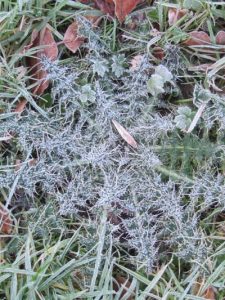
Remarkably abundant are thistles which I always think give good value as all thistles are edible as well as all of the plant. This means roots as well as the parts above ground. The frosted photographic example is a marsh thistle whose leaves can be peeled off its spines and the succulent stems eaten raw. The roots can be fried or boiled and often come in multi-ply strands a little like noodles. This species is a biennial meaning it takes two years to complete its life cycle. Many edibles are in this category and for many it is the root we are after. With biennials it is important to gather the roots at a point when they are the most full of goodness. The first year is spent gathering and storing energy ready for reproduction in the second year, it therefore makes most sense to eat a biennial root at either the end of the first year, or the beginning of the second before the energy is used up. Do bear in mind that uprooting the plant not only require permission but also should be tempered with thoughts of sustainability.

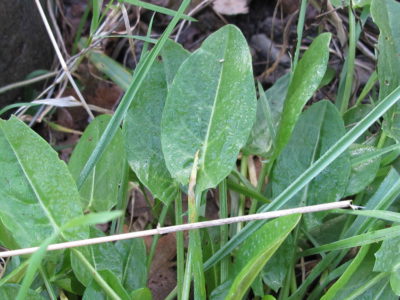
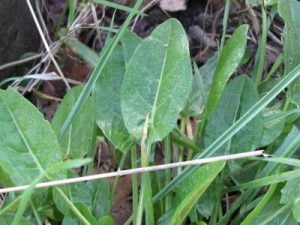
Common Sorrel is also on the menu and at present it is appearing as a rather flat, rosette form. Some people think it looks a little like a dock but the distinction is in the leaf shape with little lobes or auricles at the leaf base. Tasting of apple peel it is a great addition to salads or can be made into a soup as the French are fond of doing.

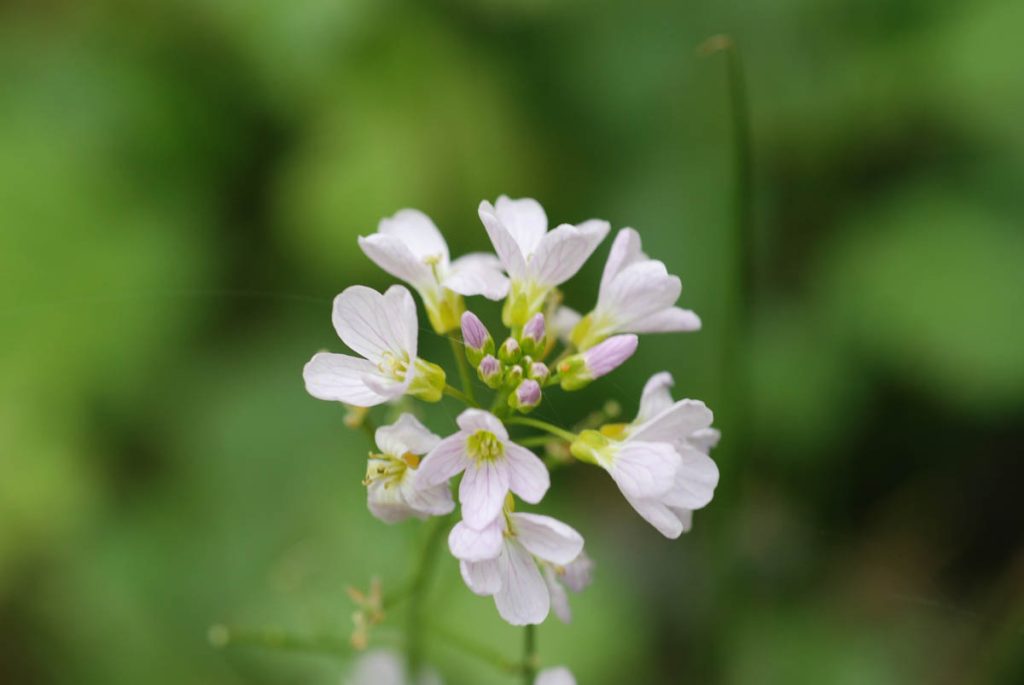
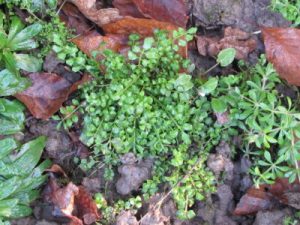
Bittercress can be found in many locations from ancient woodlands to garden walls. This intriguing little plant seems to have two periods of abundance and can be found in quantity in the early spring and then again in the autumn. Its taste is a milder version of water cress and it can be used in the same way. Also look out for its much spicier cousin Ladies Smock which will soon be poking its head out from ditches and damp places.

However you choose to use wild plants please gather with care and always remember we are not the only creatures who rely on plants for our survival.
The Root to a Good Meal

In the wild diet starchy carbohydrates are difficult to find at least in the woods and hedgerows and in any meaningful quantities. A quick glance through any wild food book reveals lots of salad options but few veg to really get your teeth into. Springtime does however reveal energy laden roots and despite the sudden halt in growth caused by the recent cold spell there are still good things to be found.

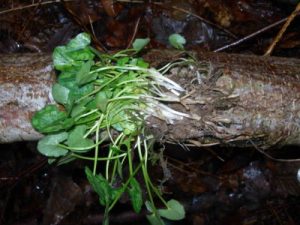
Lesser celandine is a perfect spring plant and to me a real indicator that things are beginning to change. It is to be found in many locations from ancient woodland to road side banks, as a member of the buttercup family its bright yellow flower can be a great help in identification. It is the starchy root nodules which provide the meal and in this case the root’s appearances lends itself to one of its other common names of pilewort. This description stems from the doctrine of signatures a medicinal belief system whereby plant parts resembling bits of the human body where considered beneficial for that part of the body. Celandine roots where reckoned to be very good for the treatment of haemorrhoids but I will let you make your own mind up about this. Incidentally if you chat to herbalists they would suggest that the doctrine of signatures choose features on the plants which reminded the physician of its effectiveness, perhaps, if this is indeed the case there is more wisdom in this way of thinking than may first appear.

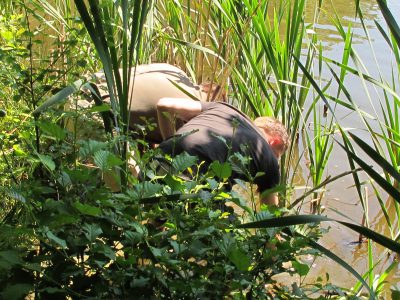
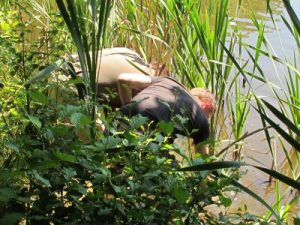
A second great spring root is the cattail often times called bulrush, in fact it’s a year round restaurant and can give a meal at any time of year. It is the rhizome that we would be interested in April. This starchy food store is packed full of good carbohydrate which can be accessed using techniques as simply as heating the rhizomes directly in the fire and then sucking out the starch, or a more involved extraction using hot water, followed by settling it out and drying as a kind of flour. The other great benefit of cattail is its abundance, as a succession plant it is desperate to try to dry up ponds and can be found in huge quantities. This would have been very important to anyone trying to live from the land as many calories can be lost in the pursuit of food.

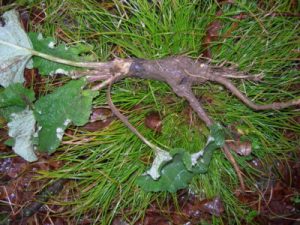
Burdock is another plant which starts to make itself known in the month of April and although all of the plant is edible the leaves are exceptionally bitter. Cooking does remove this bitterness however. The prize of the plant is the root system which even raw is, in my opinion quite delicious. The root can be huge and once the fibrous outer rind is removed can be treated as any root vegetable. It is a biennial plant and should therefore be harvested at the beginning of its second year or at the end of its first, the root will have maximum nutrition at these times. Digging from nice deep and soft soil will also reveal larger roots. It is also possible to burn more calories that can be taken from the plant by digging in a hard or stony area.

Pignut is a real gem; its feathery foliage is an indicator not only of spring but also ancient woodland. Its below ground parts are of interest to the forager forming a nut similar in texture and taste to sweet chestnut but with a hint of radish.

As with all foraging please seek landowners permission, avoid protected plants and gather from far and wide to so as not to put to much pressure on local populations. After all you may wish to come back for more in the future.

Secrets in Scat

It may well be considered a strange and even bizarre claim to fame but as result of my natural history study and interest. I have, after many years, become the proud (if that’s the right word) owner of a collection of droppings from most of the UK’s land mammal population. While this would seem a weird thing to be collecting I should explain, perhaps, that the tracking of animals involves finding and interpreting the things they leave behind, the most immediately obvious sign of an animals passing, at least to most, would be footprints which are indeed valuable in determining who has been about. Often times however the soil or, notably recently, the weather conditions don’t lend themselves to finding footprints. Droppings however can and do stick around for ages and give a wealth of information about the creatures that left them. There is a very good reason for my collection, honestly, but more of that later.

Firstly it’s useful to think about how animals use their scat in their day to day life. Droppings aren’t always just a means to get rid of unwanted material from the body, they also convey important information about the sex and condition of the animal and are used as territorial markers, many species also use urine to help with this. With this in mind location as well as content can be useful in determining what animals are in your local patch. This is particularly important when some animal droppings start to look very alike and often location gives a big clue to the identification. Deer are a prime example of this; most species have very similar droppings which at this time of year form oval pellets often with a nipple at the end. In the spring with rich diet these clump together and are delightfully called croties. There is a size overlap between species, roe and fallow deer for example but location can help here. Roe are territorial and often leave their droppings in regular spots piled up on their trail, fallow on the other hand tend not to be so fussy and drop them randomly often in their beds after they stand up. There is an important distinction between territory actively defended and home range where an animal might hang out. Territorial animals use droppings and other things as keep off signs. Another example of animals creating latrines are the vole family which leave their dropping at regular spots along their runs often at junctions, rats and mice once again are a little more random.

Other things to look for are content, shape and size, carnivores often have fur, feather and bone in their droppings, which in the case of canines and the mustilids are frequently twisted and tapered. These too can form markers, fox very often deposit scat on high points such as tussocks of grass and at trail junctions to advertise. Incidentally on my wildlife tours to Europe I have seen this many time when tracking wolves. Cats tend to produce sausage shaped dropping which often break into cylinders and badgers due to their predominately earthworm diet often produce a splat (despite being in the weasel family). Frequently this is found in dug latrines but I have on many occasions found badger dung in the middle of a trail. I like to think they perhaps got caught short! One of the most interesting I found was a fresh badger scat in a hole with the intact front feet of a mole sticking out at right angles.

Getting back to the reason for my collection, I have for all of my life been very interested in wildlife and natural history. I have in that time gained a fair knowledge in the area of identifying tracks and sign. A few years ago I became involved in bringing to the UK an international evaluation system for judging the skills of wildlife trackers and I am currently working my way through this system. This has entailed bringing in experts form the USA to test our skills. It became apparent early on that there isn’t a great deal of good information on animal droppings, hard to believe I know. I decided the best option would be to collect examples from known species by using captive animals feed on a natural diet. Armed with this information I was able to examine measure, dare I say smell and create a decent datum point to work from.

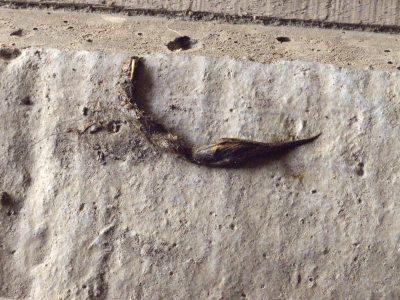
So despite the strangeness of my collection and in many ways because of it, I can take you into the countryside and fairly confidently show you the Danish pastry twist of a woodpigeon dropping, the green tic tac of the water vole, the differences between bird pellets and mammal droppings and all manner of secrets and stories contained within scat.

Nature Is In The Detail

For the last few years the interest in bushcraft and the outdoors has grown immensely to the point where it has almost become an obsession. Constantly I am asked by students where their progression within the subject lies. My answer is always the same; “study nature”. There are no areas within the subject of bushcraft that cannot be enhance and improved by understanding the world around you in more detail.

Some may be obvious, wild plants for food and medicine clearly require correct identification of the species sort. This can be taken further however by understanding the habitat requirements, associations and ecology of the individual species. Is your chosen plant found within a specific national vegetation classification (NVC)? Does a specific fungi have a mycorhizal relationship with a certain tree? The potential for study is almost endless and is something I am convinced our ancestors excelled at. I don’t believe they wandered aimlessly about hoping to stumble on the most useful plants and trees. I believe they read the landscape, the ecology and the relationships in nature and went straight to the areas most likely to provide for their needs.

Awareness and curiosity are key to noticing what grows where and with this comes a wealth of new and helpful knowledge; improvements in locating springs from the local geology, finding animals from identifying suitable habitats and even potentially aiding navigation by understanding landforms.

Studying what the deer is eating at a particular time of year, where they prefer to rest and at what time of day and their behaviour when disturbed. These are just a few of the questions which when answered will improve your tracking skills and can be applied to all the animals you wish to follow.

The connected nature of all living things is often quoted but is still true the deeper you delve into the subject the more this connectivity is revealed and the more understanding you are privy to. In my view this detail is where the serious student of bushcraft needs to focus, excellence does not reside in the latest kit but is found behind the door of the natural world and your curiosity is the key that unlocks it.